May 08, 2026
Hidden systems like electrical, cooling, air, and fuel, along with sensors, often fail without early warning and can result in sudden roadside breakdowns. Construct these systems into all inspection schedules to minimize unplanned outages and safety hazards.
Electrical faults, cooling issues, air leaks, fuel delivery problems, and sensor malfunctions commonly begin as loose connections or minor leaks. Tackling these early reduces the risk of big repairs, downtime, and expensive emergency callouts.
A formal preventive maintenance program that incorporates driver inspections, seasonal checks, and system-detailed checks increases reliability. Standardized forms and checklists assist drivers and technicians in identifying patterns and recurring faults before they become trends.
Proactive monitoring and telematics data warn of abnormal temperatures, pressures, electrical loads and fault codes. Leverage this information to plan maintenance ahead and focus on high-risk vehicles and parts.
By using historical data, sensor feedback, and duty cycles, predictive maintenance helps predict failure instead of responding to it. Building a maintenance calendar around these insights promotes more uptime and better cost control.
Training drivers and fleet managers to notice subtle warning signs and report them quickly is crucial for safe and efficient operations. Incentivize drivers to promptly report any strange smells, vibrations, warning lights, or shifts in performance so maintenance crews can intervene before a breakdown.
Truck breakdown systems are solutions that assist motorists manage highway faults rapidly and securely. Many feature real-time diagnostics, GPS tracking, and direct connections to support staff or repair shops. Most fleets employ these systems to decrease idling, schedule repairs, and maintain loads. Some operate via telematics units in the truck, while others use mobile apps that link drivers, dispatchers, and mechanics. Great systems follow fault codes, service history, and key info such as fuel consumption and engine hours. In the following sections, the post walks through key features, how they work, and what to weigh when selecting a solution.
Truck breakdowns often trace back to systems that sit out of sight: wiring runs, cooling lines, air circuits, sensors, and fuel paths. None of these get the attention tires or visible engine bits do, and yet they silently define how often a truck breaks, how long it stays down, and how costly each event is. Ignoring them can turn small, inexpensive repairs into full engine or powertrain failure that halts a vehicle on the spot.
More likely to have a sudden engine, brake, or tire related breakdown.
Higher likelihood of total vehicle breakdown in high-traffic zones.
More emergency call-outs, tow bills, and after-hours repair rates.
Spoiled or delayed loads, penalties, and lost customer trust
Long-term damage to engines, gearboxes, and safety systems
Difficulty spotting root causes without data or inspection history
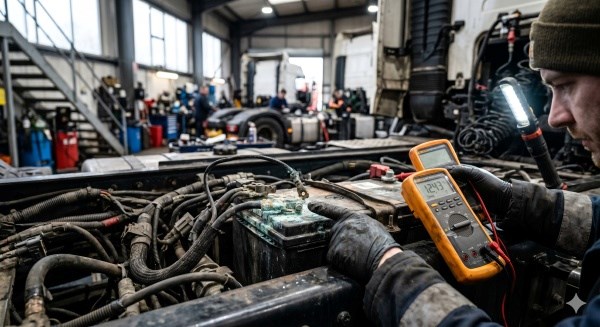
Hidden electrical faults often start with small things: corroded battery posts, loose ground straps, worn insulation, or a weak alternator that does not keep the battery charged. A truck that’s hard to get going in the morning is sending a red flag right at us here, and it can be either the electrics or the fuel system. Out of that comes the danger of dead batteries at remote locations, unpredictable power loss to ECUs, or intermittent operation of lights and sensors. That can bring down the ABS or stability systems and can leave drivers in the dark at night or in inclement weather. Checking for tight, clean terminals, secure harness routing, and blown fuses, supported by straightforward voltage and load tests, eliminates many of these failures before they come down the road. If fleets omit this, defects accumulate, trucks idle for hours waiting on mobile electricians, and the true underlying cause remains concealed until the same truck breaks down again.
Cooling systems tend to fail silently initially, then catastrophically. Small radiator leaks, a slipping fan clutch or low coolant from a slow hose seep might not present themselves until the engine is under strain during a long ascent. When coolant cannot get the heat away, the engine overheats. If this continues, it bends heads, blows gaskets, or necessitates engine replacement. A blown engine, even from something as small as a busted thermostat, can turn a scheduled service into an immediate, total vehicle breakdown. Regular inspection of coolant level, hose condition, belt tension and radiator cleanliness, and easy rules such as pulling over when the gauge spikes are foundational steps in any reasonable preventive plan.
Air systems lurk behind several serious incidents but usually receive only a cursory glance. Slow leaks in brake lines or fittings cause compressors to run more, increase fuel consumption, and reduce the cushion drivers have in an emergency stop. In heavy-duty trucks, that can translate into extended stopping distance or even complete brake loss on steep declines, which is one reason brake system failures are associated with an estimated 30% of truck crashes. Air suspension leaks weaken handling, shift load balance, and cause uneven tire wear that contributes to blowouts, still one of the most frequent roadside breakdown culprits. Regular soap tests on lines and joints, drain checks on air tanks, and close review during inspections all help catch leaks before regulators or inspectors find them or before a driver has to make that dreaded call for help from the shoulder of a busy highway.
Fuel systems do not fail often, but when they do, the hit is direct: clogged filters, weak pumps, or bad injectors leave the engine starving for fuel under load, causing rough running, sudden loss of power, or stalling in traffic. These breakdowns often reveal themselves as hard starts, a rough idle, or strange knocking sounds well before the truck breaks down, so drivers who report early symptoms help avoid breakdowns and spoiled cargo. Unplanned roadside stops often come with missed delivery slots and extra fees, so many fleets fold fuel checks into standard services: fresh filters on schedule, pressure and return-flow tests, and inspection of lines for rubbing or kinks. Done well, this supports fuel economy, which multiplies across a fleet and helps offset maintenance costs.
Today’s trucks depend heavily on sensors to operate engines efficiently, handle aftertreatment, and maintain safety systems, including emissions controls and lane and stability assist systems. When these sensors drift out of spec, get dirty, or fail, they can inundate drivers with alarms or force the vehicle into limp mode, reducing speed and power to safeguard the engine and aftertreatment. Powertrain or engine control issues are commonly the most difficult, as one bad signal can impersonate much bigger engine or powertrain failures. That complexity makes it far more important to respond quickly to warning lights and diagnostic codes, instead of clearing them and crossing your fingers. Routine cleaning, calibration checks, and use of specialized software or third-party inspection services provide fleets a more transparent picture of what’s breaking, how frequently, and why. This aids follow repairs, connects recurring sensor errors to more profound wiring or part issues, and shapes plans that preempt repeated downtime. Paired with daily walk-arounds and tire fundamentals—pressures checked with a trusted gauge, timely rotations, and retirement at minimum tread depth—these steps reduce the likelihood that a typical tire issue, sensor defect, or unseen system problem will strand a truck. Knowing why trucks break down is step one to a fleet that remains dependable, and consistent, forward-thinking maintenance transforms that knowledge into less roadside assistance and more punctual journeys.
The cascade effect in truck breakdown systems is the identical underlying concept experienced in large-scale catastrophes. A minor crack in one area triggers a domino effect of other collapses. In risk science, the cascade effect refers to the ripple impact a disruption has on critical infrastructure, where one vulnerable spot propagates into broader destruction. That same pattern emerges in trucks daily, just on a smaller scale that still impacts cost, safety, and uptime.
Nothing so straightforward as a coolant leak, that’s obvious. One loose clamp on a hose and a slow drip begins. Coolant level dips, engine runs warmer and the control unit shuts power down to save it. If the leak remains untended, the engine overheats, head gaskets blow and oil and coolant mix. What starts as a 5-minute repair with a new clamp and some coolant becomes a complete engine tear-down. A loose electrical ground can, too. First, small sensor faults occur. Then the ABS goes out, the tranny shifts hard, and eventually the truck parks on the side of the road with a fried control unit. Every step is connected, yet each connection is not necessarily apparent at the time.
Real fleets experience this when minor jobs fall through. Going a little too long without grease on suspension parts can result in worn bushings, bad tire wear, and cracked brackets from additional stress. A tiny air leak at a fitting can make the compressor run extra long, aging it, driving fuel consumption up, and causing weak brakes when the system cannot hold pressure. These rhythms echo the way floods or heat waves strike power, transportation, and even human health. In 2002, Europe’s record floods cascaded, affecting more than just the water damage and setting off impacts on roads and power lines. In 2003, a heat wave killed some 70,000 people in Europe, with grids, hospitals, and transport systems all under strain. Those cascade effects were intricate and not always obvious initially due to underlying connections in the systems.
Fleet managers can learn from that sort of systems thinking. Keeping good records on breakdowns, root causes, and repeat faults indicates where little things have a tendency to become big. Teams can map causes and effects in a simple way, much like Causal Loop Diagrams used for disaster work, to see feedback loops. For example, deferred service leads to more roadside calls, rushed fixes, and more deferred service. When managers analyze these chains, they can schedule inspections, inventory appropriate spare parts, and establish policies that encourage early repair, which reduces repair expense and downtime while providing drivers with safer, more stable trucks. Over time, this sort of analysis makes response smoother when failures do occur because common routes and vulnerabilities are identified beforehand.

Proactive system monitoring means monitoring truck health 24/7, not just when a fault light appears. The goal is to detect these small shifts in electrical loads, air pressure, coolant temperature, or sensor feedback before they cause a failure. This reduces emergency fixes, decreases roadside danger, and fits with broader fleet strategies to minimize downtime and keep rigs generating income. With most fleets anticipating over 6 hours of downtime per breakdown, each incident costing $1,000 to $2,500 in many cases, reliable monitoring is no longer an optional add-on; it’s a business imperative.
A practical checklist for ongoing monitoring can include:
Electrical system: Track alternator output, battery voltage under load, and any spike in current draw from lights, HVAC, or liftgates.
Air system: Watch compressor duty cycles, tank pressure build time, and low-air warnings to spot leaks or failing valves before brake performance drops.
Cooling system: log coolant temperature trends, fan clutch activity, and coolant level changes. Overheating is a serious danger that can cause rapid engine destruction.
Engine and powertrain: read fault codes, misfire counts, oil pressure trends, and transmission temperature. These complex systems can fail without much warning and cause full vehicle shutdown.
Brake performance: Track wear sensor data, air pressure at service and parking circuits, and stopping distance feedback since brake issues are linked to about 30 percent of truck accidents.
Driver state: Monitor hours of service, hard braking, lane departures, and time of day to flag possible fatigue. Long hours and night shifts unsettle normal sleep cycles.
When this checklist drives a preventive maintenance plan, fleets can schedule repairs before failure, cut down on emergency call‑outs, and keep trucks and drivers safer. This type of monitoring helps with driver retention, as fewer roadside stops and less bumpy schedules are generally more enjoyable to work through. For most fleets in an increasingly crowded global transport market, ongoing investment in proactive tools and transparent processes is among the key means to remain competitive.
We have found that driver inspections remain one of the most immediate and practical forms of proactive monitoring. A good regimen includes both pre-trip and post-trip inspections, with special focus on components that conceal issues, such as brake lines, tire sidewalls, wheel ends, and wiring at the rear lights and beneath the cab. Most of the problems that eventually manifest themselves in fault codes, such as slow air leaks, loose connectors, and uneven tire wear, first demonstrate themselves visually in small signs or audibly in faint sounds.
Drivers need to be taught to report any strange noise, new vibration, warning light, burning smell, or visible fluid immediately. A subtle squeal when braking at low speed can suggest uneven pad wear and ties into the broader safety landscape where brake failures factor into approximately 30 percent of truck crashes. A slight increase in coolant temperature on long grades can indicate a fan problem or a partially clogged radiator, and advance notice allows the shop to repair it before the engine overheats.
Having a standard inspection form makes this process more consistent. A basic paper or digital pre‑trip form that addresses lights, brakes, tires, fluids, couplings and in‑cab electronics forms a record over time. If a single unit continues to trigger low coolant or repeated ABS lamps, maintenance can put it on a watch list and intervene with a deeper check before the breakdown. This pattern tracking helps shed light on why some trucks spend more time in the shop and supports long‑term fleet planning.
Thoughtful driver training brings it all together. When they know what to look for, how to fill out the form, and why quick reporting matters to their own safety and pay, drivers reduce roadside failures. In turn, fewer breakdowns mean less strain on drivers who already experience long shifts, tight delivery windows, and broken sleep, which promotes both safety and retention.
Telematics allows real-time monitoring across an entire fleet with hundreds of vehicles covering hundreds of miles. These systems extract data from the engine control unit, brake system, and transmission, among other modules, then transmit it to a central platform. Fleet teams can view fault codes, fuel utilization, idling, severe events, and even coolant or oil temperature trends.
Alerts are critical. For instance, a persistent high engine temperature warning on extended climbs can queue up a work order to inspect the cooling system prior to a breakdown and engine overheating. An overnight pattern of low voltage warnings can indicate weak batteries or parasitic draw which can leave a truck stranded in the morning with the inability to start. Taking action on these alerts early helps fleets reduce the chances of a truck breaking down on the road and requiring expensive towing or roadside service.
Trend analysis kicks it up a notch. If the data indicates that a particular model year experiences an increased number of powertrain faults, the fleet can either stock particular parts or bring vehicles in for earlier inspection. If multiple trucks in hot areas exhibit elevated brake temperatures, the crew can analyze driving habits, cargo, or routes. Over time, this type of review assists in highlighting high-risk components and frequent failure points and connects directly to preventative maintenance schedules that seek to minimize downtime and repair costs.
Telematics can assist in monitoring driver fatigue. High rates of lane departure alerts at night, increasing hard-brake events late in a shift, or long night driving hours can indicate that a driver is fatigued. Responding to those signals by modifying schedules or advocating rest puts another proactive safety buffer on top of the hardware inspections.
When telematics data feeds into a joined-up maintenance programme, fleets can connect each alert to a defined action, monitor completion, and quantify impact such as fewer road calls, reduced breakdown costs, and increased uptime. That facilitates leaner, more deterministic operations where trucks are on the road more and waiting on parts or emergency fixes less.
Seasonal checks keep proactive monitoring in tune with shifting weather and road conditions. In the winter, electrical load increases due to heaters and defrosters, batteries lose capacity, and diesel fuel can gel in the cold. Cooling systems, tires, and brakes all get put to the test in hotter months, particularly on long downhill stretches or when you’re stuck in slow moving traffic. A static, all-year checklist frequently overlooks these changes, so fleets typically shift emphasis by season.
Winter prep generally translates to close inspections on batteries, block heaters, antifreeze strength, and air dryers. Weak batteries that appear to be healthy in mild weather are likely to fail in freezing temperatures, resulting in no-start events that increase downtime and emergency call-outs. Air dryers pull moisture out of brake lines, and if they are not operating well, ice can form and block air flow, increasing the danger of brake issues that can trace back to significant safety events. Cooling systems are in play all year round, as you can still overheat in winter on steep climbs if coolant flow or fan control isn’t correct.
Hot-weather checks skew toward tires, brakes and cooling. Elevated road temperatures increase tire pressure and can drive older casings to failure. Extended heavy use on steep grades can cause brake fade if components are already worn. Monitoring coolant temperature, fan cycles and any coolant loss is essential in this regard. Overheating at high load can lead to swift engine damage and extended, expensive repairs.
Key seasonal checks can include:
Battery condition and charge tests prior to peak winter or summer loads.
Antifreeze mix and coolant level check, along with radiator and hose inspections.
Block heater function checks in regions with sub‑zero temperatures
Proactive system monitoring includes air dryer, air line, and gladhand inspections to minimize moisture-related brake problems.
Tire check for tread, sidewall cracks, and pressure for anticipated temperatures.
Brake lining, drum or rotor, and slack adjuster checks in advance of mountain or high-heat routes.
HVAC and defroster checks for driver comfort and windshield clarity.
By aligning these checks with your proactive monitoring tools and driver reports, you help your fleet spot weak points before the most challenging weather hits. This reduces seasonal breakdown spikes and keeps vehicles available for peak demand.
Predictive breakdown prevention leverages data from trucks to detect problems before they become roadside failures. It connects historical records, live sensor data, and driver behavior so fleet teams can intervene early rather than respond when a truck breaks down on the road.
Predictive maintenance tools collect hundreds of thousands of data points per vehicle, ranging from engine temperature and oil pressure to brake wear and fuel consumption. Rather than detecting anomalies alone, over time the system learns to identify patterns that resulted in obvious failures in the past, such as gearbox faults or injector issues. When a similar pattern reappears, it can mark that truck as high risk. It can be more accurate than basic preventive maintenance, which occurs at fixed time or mileage intervals and may induce work the truck does not yet require.
Armed with this information, fleets could schedule repairs and part replacements according to each truck’s usage. For instance, a long-haul truck doing 1,500 kilometers a week on highways will wear brakes and suspension parts differently than a truck making short urban runs with multiple stops. They read duty cycles, load history and driver usage and then predict when a major overhaul or key part swap is upcoming. That helps you avoid waiting for warning lights or breakdowns, while dropping unnecessary shop stops.
From those insights, a transparent maintenance calendar develops. Rather than treating all vehicles equally, managers can prioritize high-risk systems, like cooling, fuel, or electrical, for each asset. Remote telematics and diagnostics feed that calendar in real time, displaying underperforming trucks on a dashboard, even when they are hundreds of kilometers away. It could alert weeks in advance to a probable failure, allowing you to order components, reserve shop space, and work around lead times.
Regular inspections still count, even if trucks appear good. Together with predictive alerts, they minimize unplanned downtime and extend truck life in a practical and budget-conscious manner.
Knowing subtle warning signs, like small changes in the way a truck sounds, feels or responds, is one of the most actionable ways to keep breakdown systems from being pushed to their limit. Early warnings tend to manifest several days or even weeks prior to a truck breaking down on the road, and their detection can be the difference between a quick fix and total system breakdown.
Educate your train drivers and fleet managers on how to detect and communicate early warning signs, like strange smells, new vibrations, or warning lights that flicker on and off. A truck that has difficulty starting in the morning, even if it starts, can indicate battery, starter, or fuel system problems. Those initial warnings, slow starts, clicking noises, or low headlights, are cues to take action before the truck is totally dead. A light that comes on, then off again, is still a stored fault that you should get checked with diagnostics, not ignore.
Truck cranks slow, needs multiple pulls to start, or has dimming headlights at idle.
New vibrations in the steering wheel, seat, or floor at specific speeds.
Uneven tire wear across the treads or consistent tire pressure loss on a single wheel.
Spongy brake pedal feel, longer stopping distance, or the truck pulling to one side while braking.
Unexpected increase in gasoline consumption with no variation in path, cargo, or manner of driving.
Sweet, burnt, or fuel smells in or around the cab and engine bay after a trip.
Sporadic engine, ABS, or brake warning lights that clear themselves.
All of them indicate a system drifting out of normal range. Uneven tire wear or low-pressured tires both decrease gas mileage and increase the risk of a blowout. Daily pressure checks with a trustworthy gauge and routine rotations catch leaks, alignment issues, and minor damage before they propagate. A spike in fuel use can indicate injector, sensor, or exhaust issues that become pricier if ignored. Recognizing subtle warnings can be the difference between a bandaid repair and a full replacement that can sideline a vehicle for weeks.
|
Date |
Truck ID |
Reported Sign |
Location/Speed |
Initial Check |
Status |
|---|---|---|---|---|---|
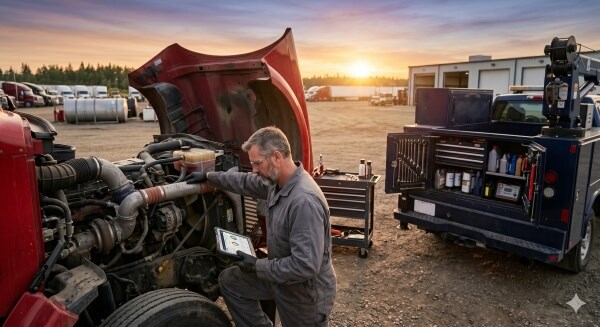
A powerful truck breakdown system is not just a number you dial when a rig goes down on the shoulder. It’s an uptime partner that plans ahead, responds quickly when things go awry, and helps you learn from every incident so the same failure does not happen again.
As an uptime partner, your business stands on three pillars: expert repair, preventive care, and emergency support.
Expert truck repair means techs who treat engines, transmissions, electrical faults, brake systems, trailers, and aftertreatment units with equal care. It means parts, tools, and transparent repair records so fleets can follow work performed for each unit, identify trends, and get ahead of service dates. A reliable uptime partner helps fleets stay ahead of service schedules, track repairs, and analyze root causes of recurring problems, whether it is a sensor that fails every 60,000 kilometers or a cooling issue that surfaces on steep grades.
A real uptime partner focuses on what the driver and dispatcher feel most: time off the road. Your crew needs to read fault codes, dig into lurking causes, and not quit at the first quick fix. That could mean examining wiring harnesses for rub points, evaluating chargers following a dead-battery call, or analyzing telematics data to determine whether excessive idling is causing recurring DPF errors. The goal is speedy, dependable service that reduces recidivist breakdowns since every occurrence can set a truck back $1,000 to $2,500 or more.
Safety, compliance and uptime go hand in hand. Your Uptime Partner Routine inspections, torque checks and brake tests keep trucks roadworthy under harsh heat, cold and heavy loads. Tire care is a clear example: daily pressure checks with a reliable gauge and regular rotations help stretch tire life and cut tire-related breakdowns. A quality uptime partner detects irregular wear or slow leaks early, so you repair them in the yard, not on the highway.
Every operator requires unique backing. Owner-operators might require customizable service packages and straightforward, concise reports. Big rigs and heavy-duty haulers require round-the-clock roadside assistance, data dashboards and alerts. In both instances, your uptime partner should provide data and insights that inform maintenance schedules, highlight which units are failing most, and minimize unexpected shutdowns. Effective communication is critical here. With 68% of fleets taking action within 30 minutes of a breakdown, quick updates and clear ETAs help dispatchers reroute loads and support drivers. When an uptime program mixes preventive maintenance, intelligent deployment of new tools and 24/7 support, it doesn’t just keep trucks on the road; it helps fleets stay competitive and retain drivers.
Truck breakdowns don’t typically begin with one big culprit. Small signs accumulate. A little leak. Something’s rattling a little. A minor alteration in gas consumption. All of them narrate a piece of the tale.
Smart teams view these symptoms as data, not misfortune. They monitor heat, oil, codes, and wear. They bridge patterns. They operate proactively instead of reactively before parts break down. That reduces danger on the highway. It conserves fuel. It keeps loads punctual.
No fleet is perfect. A well-thought out strategy, quality equipment and a strong partner make unexpected halts a seldom occurrence. Just take a fresh look at your own trucks this week. Locate a single weak link. Repair it early. Let that be the beginning of a more robust uptime strategy.
Truck breakdown systems are engine, cooling, electrical, fuel, and braking components that keep a truck running. They break from wear, neglect, extreme conditions, or quiet little defects that turn into big defects out on the road.
The cascade effect occurs when one minor fault precipitates others. For instance, a small coolant leak overheats the engine, kills sensors and stresses the transmission. Repairing early prevents this domino effect and cuts costs and downtime.
Pang proactively monitors tracks crucial data including temperature, pressure, voltages and fault codes in real-time. This aids in spotting issues before they stall the truck. Quick detection leads to quick repairs, resulting in fewer roadside breakdowns and more on-time deliveries.
Predictive breakdown prevention leverages data, sensors, and maintenance to predict when components might fail. Instead of waiting for a breakdown, parts are serviced or replaced up front. This strategy maximizes uptime and reduces overall maintenance expenses.
Typical early warning signs are different engine noise, small fluid spots on the floor where the truck is parked, slower cranking, flickering warning lights, loss of power, or marginally increased fuel consumption. Take these early warning signs seriously and avoid the road breakdown surprise!
Fleets can use routine inspections, telematics data, diagnostic reports, and driver input to identify any underlying problems. Looking at trends like repeated fault codes or recurring minor repairs spotlights hidden systems weaknesses before they become catastrophic.
Your trusted maintenance partner integrates diagnostics, data analysis, and scheduled service. They track vehicle health, suggest optimized service intervals, and promptly respond to alerts. This smart support limits breakdowns and keeps trucks on the road longer and stronger.
Need more information about heavy-duty truck maintenance and repair? DMR Diesel offers professional repair solutions and inspection services designed to keep commercial vehicles operating safely and efficiently.
Explore More Services:
Additional Reference Resources: