April 24, 2026
Understand the driveline fundamentals to identify problems ahead of time and keep secure. This comprises the driveshaft, u-joints, bearings, axles, and differentials, which convey the engine power to the wheels.
Keep an eye out for warning signs to avoid catastrophic failure. Driveline component repairs can be expensive. Troubling vibrations, clunking or grinding noises, leaks, and handling or turning difficulties typically indicate worn joints, imbalance, or insufficient lubrication.
Act quickly when symptoms surface to minimize repair expenses. Record when the problems arise, their respective speeds and road conditions, and book a comprehensive driveline check at the earliest opportunity.
Keep it lubed and it’ll last. Follow manufacturer fluid specifications, check levels routinely, and change transmission and differential oils on schedule.
Decide repair or replacement based on reasoned criteria. Component condition, vehicle age and mileage, total cost including labor, and long-term reliability are factors to consider when determining your next steps.
Employ professional diagnostics. Request test drives, visual checks, vibration and digital inspections, and demand a thorough estimate with the best value options.
Driveline component repairs include inspection, service, and replacement of parts that send power from your engine to the wheels, including the driveshaft, CV joints, U-joints, differential, and transfer case. Typical symptoms are clunks on shifts, high-speed vibration, or grease leaks at boots. Shops check for play, balance problems, and worn splines, then repair with joint swaps, boot kits, bearing sets, yoke repairs, or full shaft rebuilds. Prices depend on parts and labor hours, with a lot of repairs completed in less than a half-day, although differential work takes longer. To reduce recurring failures, technicians verify alignment and torque specifications, as well as the grade of fluid. For details on actions, expenses, and schedules, the following parts dissect every repair and service duration.
A driveline bridges the middle of the powertrain and drivetrain, and its role is to transmit engine torque to the wheels with minimal loss and at the correct speed. I frequently confuse it with the drivetrain or powertrain, but the driveline is the portion that transmits power after it exits the gearbox or transfer case and before the hubs.
A common configuration begins at the transmission or transfer case and travels through one or multiple drive shafts to the differential and axles. The driveshaft whirls to deliver torque down the vehicle, the differential divides and twists that torque 90 degrees to the wheels, and the axles force it out to each hub. Rear-wheel-drive cars frequently utilize a single long shaft, whereas duty trucks and longer wheelbase vans use a two-piece shaft with a center support. All-wheel-drive vehicles add a front shaft and occasionally a viscous or electronic coupling. In each case, the aim is the same: steady torque, tight control, and smooth change in speed.
A healthy driveline assists clean gearbox shifting, smooth power delivery and safe, stable handling. When a U-joint binds or a center bearing sags, you might experience a shake at 60 to 80 kilometers per hour, hear a clunk on takeoff, or notice uneven wear on tires and mounts. Losses in the driveline consume fuel and strain the transmission. That’s why little things, like dry splines or slop in a slip yoke, are as important as major failures, like a bent shaft.
Essential components such as universal joints, center bearings, and drive shafts in passenger cars and duty trucks. A driveline mounts two U-joints back-to-back with a center yoke. Two U-joints are connected via an intermediate shaft to cancel angular velocity changes as angles change. Sometimes drivelines link a drive shaft to a transmission or allow two drive shafts to join. Universal joints are one-time use components; change them every time the shaft comes off. There are standard size fittings, such as grease fitting threads, but some are less common and require parts lookup by make, model, and yoke series.
Routine servicing safeguards these components and reduces repair expenses. Check angles, balance, u-joint play, center bearing rubber, and diff fluid every 20,000 to 30,000 kilometers, and re-grease serviceable joints on the same cycle. Renew worn seals and rusty hardware, and always line up shaft phasing marks on reassembly to avoid inducing new vibration.
That early detection keeps you from experiencing full driveline failure, costlier repairs, and safety hazards. Keep an eye out for anything that feels different, sounds different, or has different fluid status. Then note what you observe and schedule a complete driveline inspection.
Vibrations or shaking under load likely indicate driveshaft imbalance or worn joints.
Rough shifts or jerky acceleration may indicate possible transmission or joint wear.
Clunking, clicking, or grinding indicates failing bearings, gears, or CV joints.
Fluid spots under the vehicle indicate leaks from the transmission, differential, or transfer case.
Pulling to one side, power drop, or drift: uneven power delivery or axle issues.
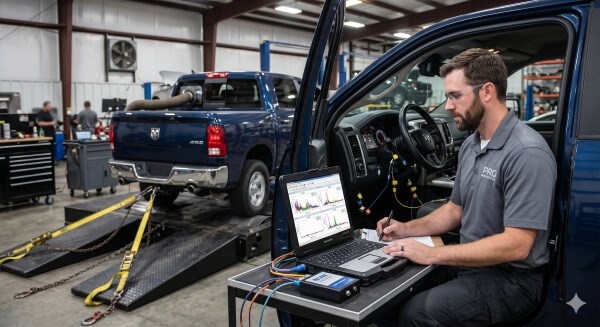
Both recurrent shaking upon acceleration and at a constant speed are symptomatic of an out-of-balance driveshaft or defective U-joints. A smooth pull turning rough at one speed band is a strong clue. A worn or bent shaft makes a rhythmic shake that intensifies with speed and is most distinct around 80 to 110 km/h.
Try it on various roads and at various constant speeds, such as 65, 80, 95, and 110 kph, to identify where the shake peaks. See if it goes away when you lift off.
Suspended vibration gnaws tires, damages joints and bearings, and increases crash danger. In extreme situations, a driveshaft can disconnect or jam, producing unexpected tug, uncontrollable steer, and an actual crash danger.
Track details in a simple table: speed, frequency (steady or pulsing), throttle state, road type, and load.
Clunks on takeoff or shift typically indicate loose joints or worn splines. Clicking in tight turns indicates CV wear, while grinding can indicate gear or bearing damage.
Hear it shifting, on steady throttle, coast and turning both ways. Key signs of driveline problems. Sudden or loud new sounds can indicate that parts are on the verge of failure. Act swiftly to save the rest of the driveline.
Puddles under the car can be from transmission, differential, or transfer case seals as well. Spot fresh puddles or dark stains where you park.
Low fluid cuts lube, builds heat and speeds wear. Let’s say you use the correct gear oil grade and specification and maintain fluid service on schedule.
Pull, delayed response or drift can come from axle, CV or differential faults that disrupt power transfer. You may experience a spike, then a flat spot, or a tug to one side while on throttle.
Have regular alignment checks and tire inspections done. Maintain a brief change log for tech guidance.
Hard turning, binding, or noise while steering can all be signs of worn CV axles, bad joints, or a faulty differential. Binding in tight turns indicates bad lube or damaged gears.
Check CV boots and seals for tears or grease spray. Dirt on the inside fries joints quickly. Address problems immediately to prevent broader driveline damage and remain safe in the car.
Driveline failure is caused by wear, improper lubrication, damage, and configuration mistakes that generate heat, vibration, and strain. Common causes include: 1) normal wear of U-joints, bearings, seals; 2) lubrication breakdown or wrong fluids; 3) shock loads from wheel hop or sudden traction gain; 4) overloading beyond rated torque; 5) misalignment from incorrect installation; 6) unbalanced or bent shafts; 7) angle errors between transmission and differential; 8) harsh environments—dust, water, heat. Shock loads, exceeded towing, or missed maintenance accelerate wear and reduce lifespan. Dust and water flush grease, heat liquefies oil and scars gears. Follow a proactive schedule: inspect every 10,000–15,000 kilometers, service fluids per the manual, and address any vibration at once.
All driveline components degrade with use and miles. Needle bearings in U-joints flatten, seals harden, splines loosen and elastomer couplers crack. Little play or rust around the caps usually identifies early stages.
Heavy-duty trucks, constant towing and off-road use increase torque spikes and angles, which speed fatigue. Tires that regain traction after spinning can shock the shaft and joints in some cases immediately.
Change U-joints, carrier bearings, and seals before they fail. Monitor mileage, load trends, and service intervals so repairs or swaps are scheduled, not reactive.
Angle and balance are important as parts wear. A shaft out of balance or a yoke offset by one spline can induce torsional vibration that disperses wear throughout the system.
What causes driveline failure?
Change fluids at manufacturer intervals with the recommended viscosity and additive package.
Grease serviceable U-joints and slip yokes, purging old grease until it is clean.
Check for leaks at pinion, axle seals, and transfer case.
Sample fluid in severe duty for heat or metal content.
Keep a written checklist for inspections and change dates.
Neglect seizes bearings and scuffs gears, pushing heat, noise, and expensive repair. Improper lubrication can attack synchronizers and limited-slip clutches, slicing life even more.
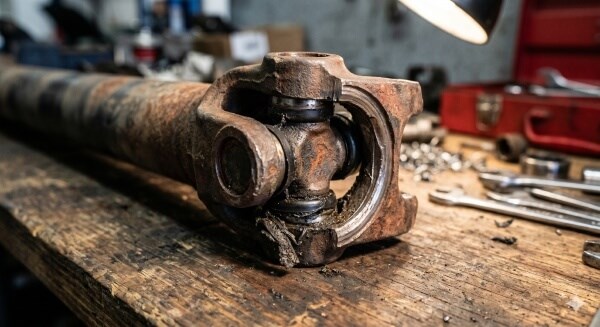
Debris, curbs or ruts can bend shafts, crack housings or bruise yokes. Even light dents can unbalance the shaft and cause failure.
Structural damage throws off alignment and balance, causing vibrations that increase in tempo with speed. Driveshaft angle errors and misalignment from bad installs pile the load on.
Inspect after any hit: look for dents, fresh scrapes, torn boots, leaks, or sling marks from lost weights. Notice new noises, shudder, or any of the four specific vibration types that indicate imbalance, misalignment, or installation defects.
Have it checked out immediately by a professional. Correct runout, rebalance, realign yokes, and set proper operating angles to return it to new integrity.
A comprehensive driveline workup tells you not only what to fix but why it broke in the first place and how to keep it from breaking again. It combines road tests, visual inspections, and computerized diagnostics to identify root causes across the driveshaft, CV axles, U-joints, transfer case, and differentials.
Technicians begin with a targeted test drive. They log when a click, hum, or clunk appears on takeoff, at cruise, in a steep turn, or on coasts. A vibration diagnosis is required here. Speed linked shakes typically indicate driveshaft balance or U joint wear, whereas load linked shudder can suggest angle issues or a dying CV joint. New vibrations, clunking noises, or regular towing are powerful flags to arrange a driveline diagnosis.
Back in the bay, visual inspection and undercarriage check follow next. Techs check for leaks at pinion and transfer case seals, torn CV boots that sling grease, rust bleed around U-joint caps, loose flange bolts, and witness marks from yokes rubbing. They check CV axles, boots, u-joints, and driveshaft tubes for play, dents, or heat spots, then examine differential housings and transfer case for cracks or leaking fluids. Hands-on inspections involve prying for axial and radial play in U-joints, rotating the shaft to quantify lash and verify smooth CV articulation lock to lock.
Powerful diagnostic tools sharpen the image. Using a scan tool, we check for transmission and transfer case codes and live slip, temperature, and clutch state data. Chassis ears or wireless mics track sounds to a board or component. A dial indicator checks driveshaft runout, and an angle finder confirms proper operating angles. Torque wrenches ensure the right torque sequence on flanges and yokes to prevent induced vibration. In the case of leaks, UV dye assists in locating seep points immediately. Digital vehicle inspections capture everything with photos, notes, and measured values, providing a transparent record and eliminating the guesswork.
Service intervals are important. Schedule driveline and transmission inspections every 40,000 to 60,000 km, or earlier following off-road use, deep water crossings or heavy towing. This timing catches clicking CV joints, early bearing howl and minor seal weeps before they become major repairs. When symptoms surface, such as vibrations at 80, a thud on gear change, or a growl in the tight turns, your full-length diagnostic road traces the fault and sets a clear repair plan.
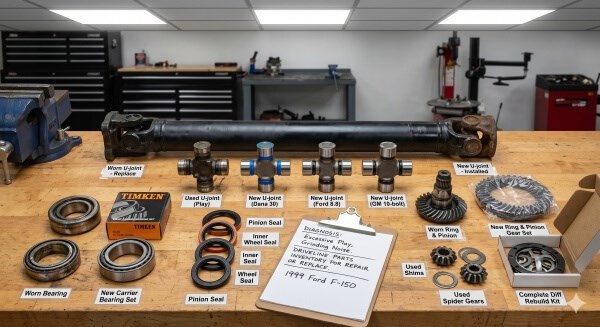
It’s the way that keeps your vehicle safe, cost-smart, and true to original. All depend on current condition, age, mileage, and obvious cost considerations. Early action matters. Professional driveline repair at the first sign of trouble can stop small faults from turning into full replacements.
Hear grinding, clunking or whining? Unrelenting noise signifies wear in the driveline's U-joints, bearings or gears.
Test for shakiness or vibrations under load. Balance or realign the driveshaft if mild. Repair or Replace? Replace if the tube is bent or the splines are worn.
Check seals and boots for leaks or tears. Fluid contamination accelerates gear and bearing failure.
Check for measure play at U-joints and slip yokes. Any unnecessary lash is indicative of imminent failure.
Check differential fluid level and quality. Replace fluid every 48,000 to 96,000 kilometers as standard care.
Replace parts at end-of-life or when they cannot meet safe limits, like cracked yokes, spalled bearings, or chipped ring and pinion teeth.
Record observations for every part — driveshaft, U joints, carrier bearing, CV joints, differential, transfer case — to facilitate precise repair decisions and warranty audits.
Prioritize safety‑critical items first: driveshaft integrity, U‑joint health, and differential setup. The driveshaft is first. Repair by balancing, re‑tubing, or replacing joints, or replace outright if runout and damage exceed specification.
High-mileage older vehicles might gain from a full driveline refresh, including new U-joints, carrier bearings, and a differential rebuild to bring back reliability. Specialized builds or extreme use can warrant custom shafts, enhanced yokes, and limited-slip or locking differentials to withstand greater torque and minimize downtime.
Repair or Replace? If the body, engine, and chassis still have years left, driveline investment typically pays off.
|
Option |
Typical cost (USD) |
Added service life (km) |
|---|---|---|
|
Balance driveshaft |
120–250 |
20,000–40,000 |
|
Replace U‑joints |
150–400 |
40,000–80,000 |
|
Rebuild differential |
700–1,800 |
80,000–160,000 |
|
New driveshaft |
500–1,500 |
80,000–160,000 |
Add parts, labor hours, fluids, and alignment/setup time. Measure against full replacement and consider warranty terms. If repair approaches or exceeds replacement, opt for the new unit.
On time maintenance, like 48,000 to 96,000 kilometers differential fluid changes, reduces your long-term spending when compared to constant emergency repairs.
Ahead of failure service reduces downtime, and downtime matters for fleets. Fewer roadside events and faster turnarounds increase utilization.
Ask for a detailed estimate with root cause, parts spec’d to OE standards, labor by task and lead times. Match options to current faults: minor vibrations may need balance. Severe impact damage likely needs replacement. Hard to turn, fresh vibrations or noise means do something now. Early fixes stop big bills.
About: Your expert repair solution Driveline transmits power from the transmission to the wheels through transfer cases, drive shafts, PTUs, axles, and differentials. It’s not the complete powertrain or drivetrain. It’s the power path post-transmission, and its health dictates ride quality, traction, and load control.
We do full diagnostics, repairs, and custom builds for all vehicle types. That covers compact cars, AWD SUVs, electric and hybrid PTU-equipped vehicles, and 4x4 low range transfer cases. For example, we repair worn U-joints on a rear drive shaft, rebuild a clutch-type limited-slip differential for a sports sedan, or reseal a transfer case leaking under load. We begin every job with a brief road test and baseline visual inspection to eliminate tire or brake noise that can mimic driveline whine.
Experienced experts manage intricate malfunctions with state-of-the-art equipment. We use scan data for wheel speed and torque demands, NVH spectrum analysis in hertz to track hums at 60 to 120 kilometers per hour, laser shaft alignment to correct runout, and thermal imaging to identify hot bearings. On-vehicle balancers balance drive shafts following a yoke or center support replacement. This reduces guesswork and accelerates the repair.
We back heavy-duty trucks, fleets, and specialized vehicles where downtime equals money. From rebuilding a 3.73 ratio differential in a 3.5-ton van to replacing a 2-piece shaft with new center support on a box truck to overhauling a PTO-ready transfer case for a utility rig. For fleets, we schedule service plans with fluid inspections every 30,000 to 50,000 kilometers, and differential or transfer case fluid exchanges determined by duty cycle and contamination analysis. Your professional repair answer.
Driveline repairs aren’t kodash. They’re time-sensitive. A swift reply can prevent a subtle hum from becoming a shot bearing and a stranded car. Quick turnarounds are possible thanks to in-stock seals, bearings, and ring-and-pinion sets, along with in-house machining of yokes and splines. You receive a transparent estimate, OE or quality aftermarket parts options, and test documentation post-road test. It’s peace of mind on every drive, safe, smooth, and efficient.
Book a driveline inspection or repair today to stay on the move.
So all in all, a well-tuned driveline makes power flow smooth, rides quiet, and keeps tire wear low. Small checks pay big. Hear a thump on launch? Feel a grind on cornering? Catch it soon. A brief road test and a lift inspection can detect loose joints, torn boots, or a bent shaft. That’s a lot of money and time.
For real world examples, consider a van with a bad U-joint that vibrated at 60 km/h. New joints had it sorted in a day. Or a hatch with a busted CV boot that flung grease. A new axle quashed the click on hard turns.
Need assistance immediately? Write a check, demand a transparent estimate, and lay out the parts on the workbench. Contact us today to secure your safe, smooth ride.
The driveline transfers power from the motor to the wheels. This encompasses the transmission, driveshafts, differentials, CV joints, and axles. A healthy driveline takes care of your smooth acceleration, efficient power delivery, and safe handling. Early care keeps your vehicle reliable and prevents pricey failures.
Check for vibration when you accelerate, clunking or clicking, shudder on takeoff, hard turning, fluid leaking or burning smells. Dashboard warnings or uneven tire wear can indicate driveline problems. Schedule an inspection as soon as these show up.
Typical culprits are bad u-joints or CV joints, lubrication negligence, ruptured boots, misalignment, rough driving, overloading, off-road trauma, and fluid contamination. Skipping service intervals accelerates wear. Periodic inspections and the right lubricants prevent big failures.
A technician road tests, listens for noises, tests fork play, inspects boots and mounts, measures angles and scans fault codes. They might do fluid testing and shaft balancing. We then provide a documented estimate with transparent conclusions and alternatives.
That depends on wear, damage, cost, and safety. Worn out joints or torn boots are usually repairable. Cracked housings, severe rust, or repeat failures might demand replacement. A good shop will contrast the costs, warranty, and long-term value.
Simple repairs, such as a CV boot or U-joint, typically are completed the same day. Differential or driveshaft rebuilds can require one to two days based on parts availability. Complex issues or custom parts can take longer. You will receive a transparent timeline in advance.
Stick to service intervals, use proper fluids, change worn boots immediately, don’t overload, and keep tires matched and balanced. Tackle vibrations early. Check them during the occasional oil change. This will catch a small problem before it becomes an expensive repair.
Not what you were looking for? Explore DMR Diesel’s expert resources on vehicle inspections, heavy-duty truck and trailer repair services.
Here are some trusted resources for you to check on.