May 22, 2026
What are the most common causes of hydraulic system failure?
What early warning signs indicate a hydraulic system is about to fail?
How can a single hydraulic failure affect the entire operation?
How often should hydraulic systems be inspected and maintained?
What proactive steps help prevent hydraulic system failures?
How does contamination specifically lead to hydraulic failure?
How can companies build a culture of awareness around hydraulic health?
Hydraulic system failures generate hidden costs via downtime, safety risks, and missed deadlines. Early detection and rapid response is key to safeguarding productivity and revenue. Even small problems that appear easy to address can mushroom into catastrophic component damage and extensive downtime.
These seemingly minor warning signs — new noises, temperature creep, sluggish movements, fluid discoloration, and deteriorating hoses — tend to manifest well in advance of a breakdown. Operators and technicians can mitigate failures by monitoring for these shifts and recording what they see and hear.
Most hydraulic failures are caused by avoidable factors such as fluid contamination, operator errors, and component wear. Defined processes around fluid handling, equipment operation, and maintenance scheduling mitigate these dangers in any fleet or facility.
One unchecked failure risks a domino effect that destroys pumps, valves, actuators, and hoses, causing repeated downtime. By tracking every failure and secondary effects, we can begin to identify root causes and inform future maintenance choices.
Preventative maintenance that integrates scheduled inspections, fluid testing, and predictive diagnostics dramatically enhances system dependability. Delegating, documenting, and dedicated filter and contamination investments prolong equipment life and minimize downtime emergencies.
Building an awareness culture where everyone is trained, motivated, and rewarded to spot and report early warning signs fortifies hydraulic system health throughout the organization. Periodic reviews of recent issues and common best practices fuel constant improvement and safer work environments.
Hydraulic system failure occurs when components that flow fluid under pressure break, resulting in loss of power, control, or movement of machinery. Failure often comes from leaks, fluid wear, clogged filters, air in the lines, or worn seals and valves. Failures may manifest as slow descent, jerky motion, high heat, weird noise, or complete loss of functionality. In aviation, construction, agriculture, and manufacturing, hydraulic system failure can mean safety hazards, expensive repairs, and prolonged downtime. To mitigate these risks, teams tend to emphasize early symptoms, regular inspections, clean fluid, and proper part selection. The next few paragraphs parse causes, signs, and fixes in more detail.
Hydraulic system failure doesn’t just break parts. It consumes time, money, and trust throughout an entire operation.
Surprise breakdowns halt work immediately. One excavator, press, or injection molding machine out of commission for a shift can mean hours of lost production. In large plants, each hour of downtime can translate into thousands of dollars of lost revenue once you factor in idle workers, missed quotas, and late delivery penalties. The repair bill is obvious, but the lost productivity is usually greater and more difficult to trace, particularly when multiple lines or crews stand idle waiting on a single failed hydraulic cylinder.
There’s safety and liability to consider. A valve stuck open or closed, a weak cylinder, or a sudden pressure drop can lead to dropped loads, uncontrolled movement, or failure of brakes and clamps. These faults increase the risk of crush injuries, fluid injection wounds, and near-miss incidents. If a failure hurts a worker or damages nearby property, costs spread fast: medical care, legal claims, higher insurance premiums, and possible fines from regulators. Even a tiny leak of hot, high-pressure fluid isn’t a minor annoyance; it’s a real hazard.
Little hydraulic problems don’t remain little when neglected. A little contamination, a clogged filter, or a minor seal leak often translates into wear on pumps, motors, and control valves. Over time, this heat and wear increase internal leakage, reduce efficiency, and force the system to operate hotter. Research indicates that many hydraulic systems dissipate roughly 80 percent of their input power in the form of heat. When that heat is not controlled, it accelerates oil degradation and component failure. One failed pump can send debris throughout the circuit, wreck actuators, and trigger a much larger, more expensive rebuild than a simple early repair.
Operationally, unplanned repairs wreak havoc on schedules. Jobs need to be rescheduled, rentals rushed in, and overtime approved to catch up. Teams waste hours on fault finding, teardown, and oil spillage cleanup instead of scheduled work or continuous improvement activities. Fluid leaks cause environmental damage, floor slip hazards, and additional cleanup charges. That’s not just a line on a maintenance budget; it defines how reliable and competitive the entire business appears to customers.
Hydraulic systems rarely implode without warning signals. Most of them are subtle shifts in sound, velocity, temperature, or fluid quality that emerge well before a hose snaps or a pump locks.
Common subtle symptoms operators overlook include:
New or louder whining, knocking, or banging sounds
Sluggish cylinders, weak final drive motors, or “lazy” controls
Gradual rise in system or tank temperature
Fluid that turns dark, milky, or foamy
Hoses with slight bulges, soft spots, or damp fittings
Monitoring fluid levels, hose condition, and system temperature and recording changes in a simple log aids in detecting patterns early and identifying root causes before a complete breakdown.
Hydraulic systems should run quietly. A steady hum is normal. Sharp whining, banging, or knocking rarely is. When a pump begins to whine or a valve block emits a light rattle, it could indicate air in the fluid, cavitation at the pump inlet, or worn internal parts that allow fluid to slip past clearances. These cracklings tend to appear before any loss in pressure. Banging and knocking, in particular, can indicate dangerous flow instability or loose parts and should never be overlooked as ‘old machine noise.’
Most teams find it helpful to construct a simple checklist for each machine that includes normal sounds and known innocuous peculiarities. New operators can then compare what they hear against that checklist. Overlooking these subtle sounds permits internal leakage and cavitation to expand, increasing heat, accelerating wear and inflating repair expenses.
A gradual rise in hydraulic temperature is one of the most obvious hidden warning signs. When fluid runs above roughly 180°F (82°C), seal compounds begin to harden or swell, fluid viscosity decreases, and oxidation accelerates, all of which reduce component life. Overheating beyond this range decreases the oil’s ability to lubricate pumps and motors, so wear increases even if the machine still “feels” normal to the operator. Adding obvious temperature dials or simple alarms that display or alert when the tank or circuit hits 82°C aids in detecting issues such as blocked coolers, internal leakage, or system pressure overload before they precipitate catastrophic breakdowns.
Machine performance degradation is frequently the first tangible warning sign that something is amiss in a hydraulic circuit. Cylinders that extend slower than normal, loaders that pause before lifting, or a final drive motor on an excavator crawling up a slope are all potential indicators of low fluid levels, pressure loss, or internal leakage within valves or actuators. There may be no visible leaks. Hydraulic fluid leaks inside components or within an excavator frame do not show externally, so the only indication is sluggish motion or reduced power.
Measuring current cycle times, travel speed, and lifting response against baseline from when the machine was in good condition provides a clear metric by which to judge change over time. If operators note when sluggish behavior starts and in which functions, repair crews can home in on whether the source is pump wear, leaking cylinders, or line restrictions. Ignoring slow response doesn’t just kill productivity; it lets the system run longer with low pressure, which can generate heat and reduce system life.
Hydraulic fluid that is in good condition tends to be clear and uniformly colored. When it goes dark, cloudy, or milky, it usually implies contamination, water intrusion, or chemical decomposition. Surface grit, fine metallic shimmer, or sludge on the bottom of a tank or sample bottle are all indications that components are wearing at an accelerated rate or that filters are falling behind. Even if the machine still operates, contaminated or broken-down fluid cannot lubricate surfaces adequately, which increases friction and accelerates component wear.
Regular visual inspections, supported by basic fluid analysis kits that measure particle counts and moisture content, provide a more precise read on fluid condition. These checks help determine if the system requires a simple filter change, a complete fluid flush, or a closer examination of internal wear contributors.
Hoses love to whisper warning signs before they pop. Minor cracks on the outer cover, slight bulges near connections, soft spots you can detect by hand when the system is depressured and cool, and slight moisture around crimps all indicate aging or internal damage. Hose failures are one of the leading causes of sudden external leaks and pressure drops. In compact machines such as excavators, fluid can puddle inside guards or frames, so it doesn’t always appear on the ground immediately.
Replacing hoses at the initial obvious sign of wear is generally less expensive than cleaning a big spill, unplanned downtime, or replacing a pump that ran dry. Good hose routing, with sufficient bend radius, safe clamps and shielding from sharp edges, reduces the risk of abrasion and local stresses that can degrade the reinforcement material over time.
Hydraulic systems fail primarily for basic, avoidable causes. In most plants and mobile machines, the culprit isn’t ‘bad luck’, but minor issues that accumulate over time, usually linked to weak or inconsistent maintenance schedules and aggressive operating conditions such as dirt, water, or extreme temperatures.
Main causes of hydraulic system failure:
Fluid contamination
Operator error
Component wear
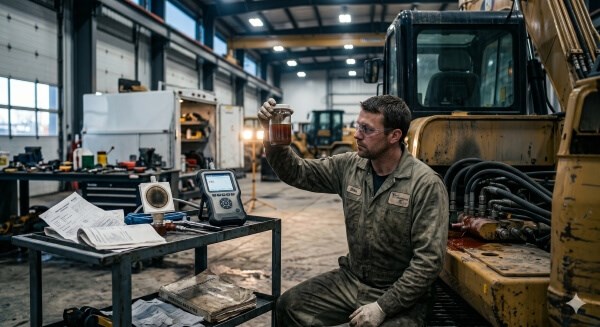
Hydraulic fluid contamination is one of the primary causes of systems breaking down. Particulate contamination consists of metal shavings, rubber particles from hoses, dust and dirt. These hard particles scratch surfaces, erode pump parts and plug small valve passages. Water contamination from condensation, washing or ingress through worn seals causes rust, loss of lubrication and fluid degradation. Chemical contamination occurs when incompatible fluids are combined or the incorrect oil is used, altering the oil’s viscosity and additive package.
Typically, contaminants enter through loose fittings, bad connections and worn or hardened seals on cylinders, pumps or motors. Poor filtration plays a major role: undersized filters, clogged elements left in service too long, or missing strainers on tank breathers all let particles and moisture build up in the circuit. Once there, such high contamination levels accelerate wear on pumps, valves, cylinders and motors, leading to internal leakage, pressure loss, sticky valves and premature failures that can reduce component life from thousands of hours to a fraction of that.
Containment is important and strict contamination control limits these risks. This means clean oil management, scheduled filter replacements by hours and test results, adequate breathers and strainers, and routine oil analysis to monitor particle counts and moisture.
Human errors are another ubiquitous source of hydraulic woes around the world and across industries. The wrong fluid type or viscosity can alter system behavior, damage lubrication, and cause cavitation in pumps. Overfilling or underfilling reservoirs compromises cooling and venting of air. Neglecting day-to-day maintenance, ignoring minor leaks, operating with cracked or old hoses, and missing filter inspections allows minor defects to evolve into catastrophic failures.
Operator training helps bridge this gap. A little knowledge about system limits, start-up and shut-down steps and simple troubleshooting, such as what to do in response to high temperature alarms or sudden pressure drops, keeps someone from running a pump under severe stress. Standardized maintenance checklists keep teams aligned so key items, such as hose abrasion, seal condition and filter status, are checked in the same way every shift.
Unchecked operator error can cause several failure modes concurrently. Pumps cavitate if you don’t heed inlet conditions. Seals burn or tear under wrong pressure settings. Hoses routed too tight or rubbing on sharp edges will burst with little warning.
Good habits aside, pumps, valves, cylinders, hoses, and motors all wear. Degradation of pumps and actuators through normal wear causes increased internal leakage and lower pressure. The system must exert more effort to move an equal load. Valves can begin to stick or drift, and hydraulic cylinders leak from worn seals or scored rods. Motors can lose torque as pistons, plates, or bearings wear out under constant load and cycling.
Monitoring service life and scheduling proactive replacement prevents unexpected breakdowns. For instance, a pump rated for 8,000 hours might only make it 2,000 hours if it runs hot or is frequently overloaded, so tracking its conditions and hours is essential. Erratic motion, pressure fluctuations, rising fluid temperature, and noisy operation are early indications that wear has moved beyond the benign stage.
Left unchecked, wear indicators lead to rising fluid temperatures, accelerating oil oxidation and seal hardening. Excess heat and corrosion then damage hoses, particularly where abrasion exists on the outer cover, increasing the likelihood of leaks or bursts. Bad design or installation, such as tight hose bends, bad routing, and wrong valve settings, adds additional stress and reduces life in any environment, particularly where systems encounter dust, moisture, or extreme temperatures.
A single fault in a hydraulic system doesn’t often stay small. One weak link frequently triggers a domino effect that cascades through pumps, valves, lines, and actuators and ultimately touches the entire machine or plant.
One malfunctioning hydraulic pump is a typical spark. If the pump loses flow or pressure, downstream actuators don’t get the oil they require. Cylinders can stall mid-stroke, motors can slow or stop, and control valves can hunt for pressure. In a press, that can translate to non-uniform pressure on a workpiece. In a hydro-turbine power plant, it can mean blades or guide vanes frozen in the wrong position, posing an actual threat to grid stability and safety. The system then strains to reach demand, so other areas experience more stress than they were designed for.
As unresolved leaks and contamination quickly convert one failure into many. A little external leak drips system pressure and oil level. The pump then runs with more air in the oil and more vacuum at the inlet. That can cause cavitation, which chips metal off pump components and can blast those particles throughout the system. Dirt and water scratch valve spools, cut seal lips on cylinders, and clog fine orifices. This gradually results in additional leaks, sticking valves, and sluggish or inconsistent actuator movement. High pressure and high vacuum at the suction side, along with acid-base corrosion in old or contaminated fluid, accelerate this wear and reduce component life.
These connected failures impact uptime and expense. One pump failure can cascade, resulting in a complete system shutdown, missed production goals, and increased energy consumption as the plant runs longer or at increased load to accomplish the same amount of work. Unscheduled downtime in mission critical sites, such as power plants or large production lines, can translate to thousands in revenue lost per hour and penalty costs, not just repair expenses. Diligent records of every failure, its root cause, and all knock-on damage assist you in crafting improved maintenance plans, establishing intelligent inspection intervals, and identifying weak designs early.
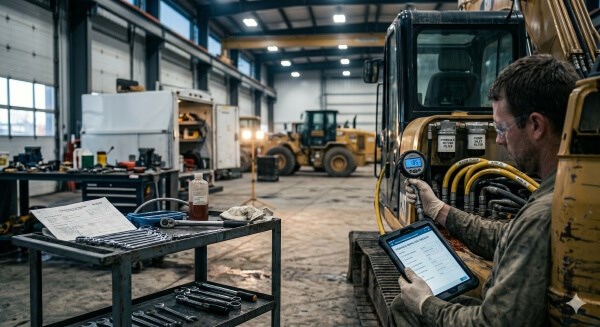
A proactive hydraulic maintenance program seeks fewer failures, shorter downtime, and longer component life by incorporating clear standards, trained people, and consistent data.
Set goals and benchmarks for the entire fleet, such as downtime targets, which are minutes of hydraulic-related downtime per 1,000 operating hours, leak rate per machine, and maximum fluid contamination. These benchmarks let you observe whether maintenance changes really increase reliability, rather than speculate.
Construct a results-focused PM plan, not an activity list. Think in terms of results such as stable operating temperature, clean oil, and tight systems. Tie PM tasks to these outcomes and modify intervals with real data, not just tradition or calendar.
Split hydraulic skills into two groups: general maintenance staff and a small group of hydraulic troubleshooters (about 10% or less of the team). General staff do things like filter changes, basic inspections, and simple tests. Troubleshooters solve complicated faults, system tuning, and root-cause analysis. This concentration keeps rare expertise where it adds the highest value.
Invest in contamination control: quality breathers, proper reservoir seals, and filters sized for real flow and duty. For most systems, aim filtration to 10 microns absolute or finer, with many fleets installing a 3-micron absolute return-line filter to safeguard valves and servo components. Cleaner oil means longer component life, more stable performance, and more reliable fluid analysis results.
Designate ownership for hydraulic care on each asset or fleet group. Identify who checks what and how frequently, and where they log it. Capture inspections, fluid results, failures, and repair actions using a simple and consistent log in your CMMS or a shared digital tool.
Monitor maintenance and downtime statistics over time. Log when a machine is down with hydraulics problems, for how many minutes, what broke, and what fixed it. Utilize this history to validate whether new filters, new PM intervals, or training efforts are effective and to inform predictive tools, not supplant them.
Regular checkups are the foundation of any preventative strategy. Teams should adhere to a regular schedule, such as daily walk-arounds for mobile equipment and shift-start inspections for fixed equipment. It inspects for leaks at fittings, cylinders and pumps, hose wear or rub points, loose clamps, damaged quick couplers and proper reservoir levels of fluid. Simple rules help: no wet spots, no exposed wires on hose guards, and fluid level within the marked band when the machine is in its parked position.
Inspection findings become even more valuable when you record them in an easy-to-maintain table of recurring problems. This allows you to prioritize what to repair first.
|
Issue type |
Asset ID |
Frequency (per month) |
Severity (low/med/high) |
Action priority |
|---|---|---|---|---|
|
Minor hose seepage |
EX-12 |
4 |
Medium |
Medium |
|
Overheating above 80 °C |
LIFT-07 |
2 |
High |
High |
|
Low reservoir level alert |
CR-03 |
3 |
High |
High |
|
Dirty sight glass |
PR-21 |
5 |
Low |
Low |
During each inspection, staff should read system pressure and temperature at key ports or on the HMI: pump outlet pressure, main line pressure under load, and return-line or tank temperature. Abnormal readings, like pressure drops under steady load or tank temperatures above recommended levels, frequently indicate internal leaks or clogged coolers well before outright failure. All readings and photo notes should enter a shared log so trends become evident, like a gradual increase in normal operating temperature over weeks.
Fluid analysis makes hydraulic oil a diagnostic tool, not just a consumable. Routine samples drawn at steady operating temperature from clean sample ports and dispatched to a lab unmask contamination, oxidation, and additive exhaustion. For instance, a fleet may sample high-duty excavators every 500 hours and lower-duty units every 1,000 hours and tighten or relax that schedule based on findings.
Operators and planners ought to check lab reports with manufacturer limits for particle counts, water content, and viscosity. This perspective helps identify when the system operates beyond design conditions, particularly when the oil appears "clean" to the unaided eye.
|
Parameter |
Spec limit |
Actual result |
Status |
|---|---|---|---|
|
ISO 4406 code |
18/16/13 max |
20/18/15 |
Above |
|
Water (% by mass) |
≤ 0.10 % |
||
|
0.18 % |
Above |
| Viscosity at 40 °C | 46 mm²/s ± 10% | 44 mm²/s | Within | TAN (mg KOH/g) | ≤1.0 | 1.4 | Above |
Teams can then use these results to shift PM. They can shorten filter change intervals when particle counts rise, dry or change oil when water content is high, or plan flushing when acidity moves past limits. Paired with good filtration—10 microns absolute or finer, frequently with a 3-micron absolute return filter—fluid analysis not only helps prolong pump, valve, and actuator life but demonstrates maintenance decisions are successful.
Predictive analytics takes the foundations of thorough inspections, fluid samples, and transparent reporting and applies them in a more systematic manner. First, collect solid maintenance history: what failed, at what operating hours, root cause, and repair details, along with downtime in minutes for each event. Add sensor data from pressure, temperature, and flow transmitters linked to the control system or telematics. From this foundation, rudimentary tools, even spreadsheets initially, can indicate what conditions commonly precede failures, such as increasing case-drain flow or brief surges in main pressure.
More advanced predictive tools can scan this data to find patterns that humans miss, like slow drift in pump efficiency or repeat overheating tied to certain duty cycles. Planners should utilize these outputs to maintain a dynamic list of at-risk components, including particular pumps, valve banks, or cylinder groups, by age, load profile, contamination history, and repair count. They then receive closer monitoring, scheduled strip-downs, or earlier replacement instead of waiting for an in-service failure.
It still relies on a craft labor force. Staff require sufficient hydraulic background to be able to trace circuits, read simple schematics, and know what adjusting a relief setting or a flow control will accomplish. Troubleshooters analyze the information and verify whether a flagged danger is valid or a sensor problem. Done well, predictive maintenance reduces unplanned outages and emergency call‑outs and moves expense into scheduled work blocks that align with production and budgets.
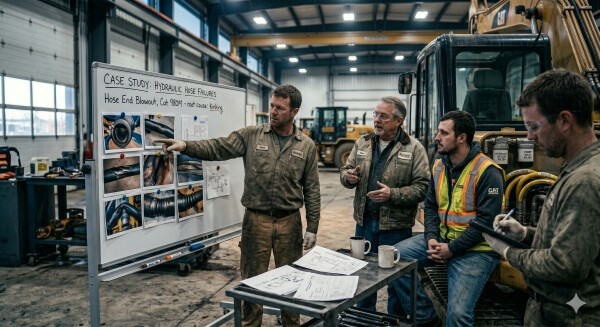
A checklist may catch the bare bones, but it doesn’t stand guard over a hydraulic fleet by itself. Real reliability comes from a daily mindset where people observe tiny shifts, ask questions, and are secure in their ability to raise their voices. It’s that kind of culture that keeps contamination low and systems stable.
Have more than just technicians working around hydraulic systems to identify and report early warning signs. This even involves drivers, janitors, and warehouse personnel receiving spare parts. Early signs can be small: a new noise in a pump, a slight delay in cylinder movement, a faint rise in oil temperature, or a small drip at a fitting. These details matter because hydraulic parts operate with clearances as small as 1 to 25 microns, far less than a speck of dust visible to the eye. Even a “minor” oversight, such as leaving a hose uncapped for an hour in a dusty bay, can draw in enough grit to generate measurable wear within hours of the machine returning to operation. Fluid contamination is responsible for roughly 70% of hydraulic-related failures, and the objective is to institute clean thinking as second nature to donning safety gear.
Leverage routine team meetings as an easy framework to cultivate this habit. Once a month, walk through recent failures or near-misses: what went wrong, what warning signs were missed, and what changed after the incident. Post up pictures of grimy filters, scored rods, or black, burned oil from your own machinery, not just from books. Discuss data from fluid samples taken at least every quarter: particle counts, water content, viscosity, and acid number. Over time, trend those results so the team sees how a slow rise in particles or water typically manifests three to six months before a breakdown. Connect that data to actual decisions, such as shifting from calendar-based to condition-based maintenance or adjusting your high-load run time. Maintain awareness of system states, like oil temperature. Operating under approximately 60°C (140°F) facilitates life and fluid longevity, so make it standard to spot any unit that runs hotter.
Celebrate the individuals who pay attention and address minor problems. That doesn’t necessarily mean big bonuses. Easy public praise at a meeting, a mention in a performance review, or inviting that guy to lead a brief toolbox talk all communicate the message that care and detail are significant. Spotlight behaviors like wiping down tools prior to working on them, capping hose ends the instant they are open, or declining to assemble parts in a dusty nook. While good contamination control programs certainly help, they only work long term when these habits are part of daily behavior, not a form to tick at the end of a shift.
Make the training ongoing, not once and done. A few minutes spent on short, targeted refreshers about clean practices, sample handling, or reading basic lab reports keeps people sharp. When a part breaks, handle it as a learning incident, not an excuse to scold. Open it, review it with the team, and inquire what signs appeared in performance or in the oil report or temperature data. Over time, this consistent attention to awareness moves the group from noticing it when it is broken to noticing it when it is still cheap and easy to fix.
Hydraulic system failure strikes more than components and fluid. It impedes work, tears at teams, and gnaws on margin. One little leak or one check skipped can stall the entire line.
Warning signs tend to appear in advance. Little dips in speed. Unusual heat in lines. Small puddles on pavement. Teams that catch these indicators early reduce risk in a major fashion.
Strong care plans make a big difference. Easy daily checks. Turn to clear logs. No clean oil. Well-trained staff that talk. These steps make breakdowns brief interruptions, not extended shutdowns.
To make progress, select one step today. For instance, schedule a brief checklist for the next shift or organize a mini team discussion on early warning signs.
Typical causes are fluid contamination, wrong fluid, overheating, inadequate filtration, worn seals, and unsuitable pressure. Frequently, the failures are due to maintenance being skipped and small leaks that weren’t discovered until they became a big problem.
Beware of strange noise, slow or stuttering movement, elevated operating temperature, foamy or discolored fluid, repeated filter changes, and tiny weeping leaks. These indicators typically show up well in advance of a breakdown and shouldn’t be overlooked.
A single failure can halt output, wreck associated machinery, hold up shipments and make overtime and on-call repairs skyrocket. It can pose safety hazards to operators and lose customers' faith if delays become consistent.
How often depends on usage, environment, and criticality. Some industrial systems do well with weekly visual inspections and routine preventive maintenance every three to six months. Essential systems should probably be monitored regularly and tested more often.
Keep it clean, use the right fluid, maintain the filtration, look for leaks, monitor temperature and pressure, and observe the manufacturer's maintenance schedule. Add to this routine oil analysis and good record keeping to catch small problems early.
Particles and moisture wreck pumps, valves, and cylinders. They cause abrasion, clog tiny passages, and inhibit lubrication. With time, this causes overheating, pressure loss, jerky movement, and abrupt failure.
Train operators to catch warning signs, incentivize rapid reporting of leaks or changes, and normalize making simple checks as a daily habit. Compare failure case studies, measure key metrics, and engage the front line in kaizen.
Need more information about heavy-duty truck and trailer maintenance? DMR Diesel provides trusted repair solutions and fleet services to help reduce downtime and improve commercial vehicle performance.
Explore More Services:
Additional Reference Resources:
Commercial Vehicle Safety Standards in Canada