October 16, 2026
Choosing between a heavy equipment technician career and a diesel mechanic career can be confusing, especially because the jobs often overlap. Both involve diagnosing mechanical problems, maintaining engines, and repairing equipment that businesses rely on every day. The biggest differences usually come down to the equipment you work on, the systems you specialize in, and the type of work environment you prefer.
In Alberta, trade names can also overlap. The province's Heavy Equipment Technician trade includes several branches, including Heavy Duty Equipment Mechanic (Off-Road) and Truck and Transport Mechanic. Diesel mechanic is commonly used as a general job title for technicians who work on diesel-powered vehicles and equipment, rather than always referring to one separate certification.
This guide compares the typical duties, equipment, skills, training pathways, and work settings so you can decide which direction best matches your interests and career goals.
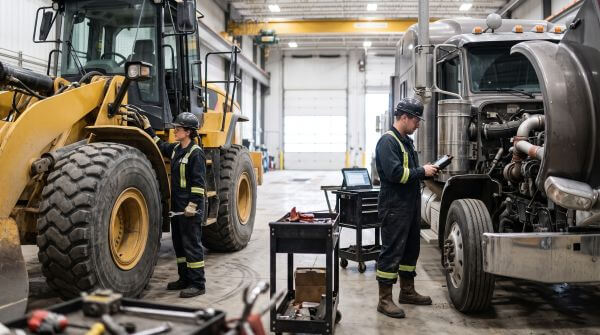
A heavy equipment technician maintains, diagnoses, repairs, and overhauls heavy vehicles and industrial equipment. Depending on their trade branch and employer, they may work on construction machinery, off-road equipment, commercial trucks, trailers, or other specialized machines.
Typical responsibilities can include:
Inspecting equipment and carrying out preventative maintenance.
Diagnosing mechanical, hydraulic, electrical, and engine-related faults.
Repairing or replacing defective components.
Testing equipment after repairs.
Completing inspection reports and service documentation.
Following manufacturer instructions and workplace safety procedures.
Working in a repair shop or travelling to customer sites for field service.
Some technicians specialize in off-road equipment such as loaders and dozers. Others focus on trucks, truck tractors, or trailers. The exact scope depends on the branch of training, the employer, and the equipment being serviced.
A diesel mechanic typically diagnoses, maintains, and repairs diesel engines and the vehicles or equipment powered by them. The title may be used for technicians working on heavy-duty trucks, buses, industrial machinery, agricultural equipment, generators, or other diesel-powered systems.
Common duties include:
Troubleshooting diesel engine performance problems.
Servicing fuel, cooling, lubrication, and exhaust systems.
Diagnosing engine-control and electrical faults.
Repairing engine components and related systems.
Performing scheduled maintenance and inspections.
Recording repair work and communicating findings.
The term diesel mechanic describes a type of work, but it does not always tell you the full range of a technician's training or responsibilities. Some diesel mechanics work mostly on engines, while others also repair drivetrains, brakes, suspension, hydraulics, and other vehicle systems.
The most useful way to compare these careers is to look at the equipment, systems, and daily tasks involved—not just the job title.
|
Area |
Heavy Equipment Technician |
Diesel Mechanic |
|---|---|---|
|
Typical focus |
Heavy machinery, industrial equipment, and/or heavy vehicles, depending on trade branch |
Diesel engines and the vehicles or equipment powered by them |
|
Equipment examples |
Loaders, dozers, construction equipment, railway equipment, trucks, and trailers depending on specialization |
Diesel trucks, buses, industrial equipment, generators, and other diesel-powered machinery |
|
Common systems |
Mechanical, hydraulic, electrical, engine, braking, and drivetrain systems |
Diesel engine, fuel, cooling, electrical, emissions, and related vehicle or equipment systems |
|
Work environment |
Repair shops, equipment yards, construction sites, customer sites, and field service |
Truck repair shops, fleet facilities, workshops, industrial sites, and sometimes field service |
|
Training |
Depends on the Alberta trade branch and certification pathway |
Depends on the equipment serviced and the relevant trade or certification pathway |
|
Best fit for |
People who enjoy a broad range of heavy machinery and equipment systems |
People especially interested in diesel engines and the systems that support them |
These are general patterns, not strict boundaries. Many roles include both heavy equipment and diesel repair. Read the job description carefully to understand what you would actually work on.

trade system is an important consideration when comparing these careers. The province identifies Heavy Equipment Technician as a designated trade with different branches, including:
Heavy Equipment Technician.
Heavy Duty Equipment Mechanic (Off-Road).
Truck and Transport Mechanic.
Transport Trailer Mechanic.
Each branch has its own training and certification details. For example, Alberta's official trade profiles describe a four-period apprenticeship for the Heavy Equipment Technician branch and a three-period apprenticeship for the Heavy Duty Equipment Mechanic (Off-Road) branch. Requirements can differ by branch, so check the official information before deciding which pathway fits your goals.
The phrase diesel mechanic may be used by employers to describe a job focused on diesel engines, but the exact qualification requested can vary. Some positions require a particular journeyperson certificate, while others may accept relevant apprenticeship progress and experience.
For current details, review the Government of Alberta's Heavy Equipment Technician trade profile, the Heavy Duty Equipment Mechanic (Off-Road) profile, and the ALIS Heavy Equipment Technician occupation profile.

Although the equipment may differ, employers in both areas value a similar foundation of practical skills.
Technicians need to identify the cause of a fault rather than simply replace parts. A methodical approach to inspections, testing, and repair verification helps reduce repeat problems.
Diesel engine knowledge is valuable in both fields. Depending on the position, technicians may also need experience with hydraulic systems, drivetrains, brakes, suspension, electrical systems, or electronic diagnostics.
Repair work can involve heavy components, lifting equipment, pressurized systems, hot surfaces, and machinery that must be safely isolated. Following safe work procedures is essential.
Accurate inspections, repair records, and final checks help ensure that work is completed correctly and that customers understand the condition of their equipment.
Technicians often work with service managers, parts teams, equipment operators, customers, and other technicians. Clear communication and dependable follow-through are important in both careers.

Your interests, preferred equipment, and long-term goals can help you choose a direction.
You enjoy working on large machinery used in construction, industrial, forestry, railway, or other demanding environments.
You want to learn about a range of mechanical, hydraulic, electrical, and drivetrain systems.
You like a mix of workshop repairs and possible field service work.
You are interested in specializing in off-road equipment or heavy machinery.
Diesel engine performance and troubleshooting are your main interests.
You want to work primarily with diesel-powered trucks, fleets, buses, or industrial equipment.
You enjoy diagnosing fuel, cooling, engine-control, and related systems.
You prefer a role where the equipment and daily work align with your diesel specialization.
These preferences are only a starting point. A job called “diesel mechanic” may involve broad heavy-duty repairs, and a heavy equipment technician position may include extensive engine work. Look at the actual duties, required credentials, and equipment list before making your choice.
A job title alone may not reveal whether a role suits you. Ask the employer:
Which equipment types will I work on most often?
Is the work primarily shop-based, field-based, or a combination?
Which trade certificate or apprenticeship level is required?
How much engine diagnosis versus general mechanical repair is involved?
What diagnostic tools and workshop equipment are available?
Will I need to provide my own tools?
Are there opportunities to gain experience with new equipment systems?
What are the expected schedule, travel requirements, and on-call duties?
These questions can help you compare roles based on the work you will actually do and the skills you want to develop.
If you are interested in a role that combines diesel-related troubleshooting with broader heavy equipment repair, review the current opportunities listed by DMR Diesel.
DMR Diesel's advertised Heavy Equipment Technician position in Acheson, Alberta, includes shop work and service-truck field work. The equipment listed includes on-highway trucks and truck tractors, off-highway loaders and dozers, railway repair units, and other specialized machinery. The current posting identifies journeyperson technicians and third- or fourth-year apprentices with relevant shop experience as potential candidates. Requirements and availability can change, so check the current listing for details.
Explore Careers at DMR Diesel to review the advertised role, qualifications, and application instructions.
Whether you are drawn to heavy machinery, diesel engine diagnostics, or a mix of both, compare the day-to-day responsibilities and required training before choosing your next step.
Not always. Heavy equipment technician is a recognized trade name in Alberta with several branches. Diesel mechanic is a common job title for people who work on diesel engines and diesel-powered equipment. The roles can overlap, so check the specific duties and certification requirements for each job.
Depending on their branch and employer, heavy equipment technicians may maintain and repair construction machinery, loaders, dozers, industrial equipment, trucks, trailers, and specialized machines. The equipment they work on depends on their training and the employer's needs.
Diesel mechanics commonly work on diesel engines and the systems that support them. Depending on the role, they may service trucks, buses, industrial machinery, generators, or other diesel-powered equipment, including related fuel, cooling, electrical, and drivetrain systems.
Pay varies by employer, location, experience, certification, specialization, and responsibilities. Job titles alone are not enough to determine which career pays more. Compare current job postings and ask about the hourly rate, benefits, overtime, schedule, and training opportunities.
Requirements depend on the branch and position. Alberta has specific apprenticeship and certification pathways for Heavy Equipment Technician and related branches. Review the official Heavy Equipment Technician trade profile and confirm the qualifications listed by the employer.
It depends on the job and the work being performed. “Diesel mechanic” may be used as a general job title, while the employer may require a specific Alberta trade certificate or registered apprenticeship pathway. Always verify the required credentials for the position.
Yes, some positions involve both on-highway trucks and off-highway equipment. Whether you can do both depends on your training, experience, employer requirements, and the tasks assigned. Look for job postings that list a variety of equipment types.
It depends on the position. Shop-based technicians spend much of their time in a workshop, while field service technicians travel to customer yards, construction sites, or other locations. Some jobs combine shop repairs and field calls. Ask about the typical work setting and travel expectations before accepting an offer.
Some employers accept apprentices at specific training levels if they have relevant practical experience. For example, DMR Diesel's current advertised position identifies third- and fourth-year apprentices with solid shop experience as potential candidates. Check the DMR Diesel careers page for the latest eligibility requirements.
Review current careers pages and job postings from employers in the Edmonton region. Compare the equipment serviced, required trade credentials, experience, schedule, and compensation. You can also visit the DMR Diesel careers page to review its current heavy equipment technician opportunity and application instructions.