October 24, 2026
A heavy duty mechanic's workday can look very different depending on whether the job happens inside a repair shop or at a customer's location. In the shop, technicians often have access to fixed equipment, a dedicated work bay, and a broad range of tools. In the field, they may travel in a service truck to diagnose or repair equipment where it is being used.
Neither setting is automatically better. Shop work can offer a more controlled environment, while field service brings variety and the challenge of solving problems on-site. Many heavy-duty roles combine both, so it helps to understand what each setting involves before applying.
This guide explains the differences between shop work and service truck work, the skills each requires, and the questions to ask when deciding which environment suits you.
Heavy duty mechanics maintain, inspect, diagnose, repair, and overhaul heavy vehicles and equipment. Depending on the employer, they may work on commercial trucks, truck tractors, trailers, construction equipment, railway machinery, and other specialized units.
Common responsibilities include:
Performing scheduled maintenance and inspections.
Diagnosing engine, electrical, hydraulic, brake, suspension, and drivetrain problems.
Repairing or replacing worn or damaged components.
Testing equipment after completing repairs.
Preparing repair notes, estimates, and service records.
Following workplace safety procedures and equipment manufacturer guidance.
Communicating equipment condition and recommended work to supervisors or customers.
The exact mix of duties depends on the equipment, the technician's qualifications, and whether the work is performed in a shop or at a customer site.

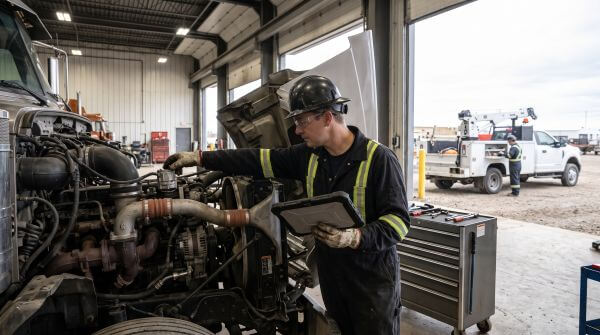
Shop work takes place at a fixed repair facility. Equipment is brought to the shop or scheduled for service there, and technicians typically work in designated bays with access to workshop tools and equipment.
A shop-based day may begin with reviewing assigned jobs, checking repair instructions, and confirming which tools or parts are needed. The technician inspects the unit, diagnoses the problem, and carries out the required maintenance or repair.
Depending on the job, this could involve servicing a truck, troubleshooting an electrical fault, repairing a hydraulic component, completing an inspection, or performing a larger overhaul. Technicians may also document findings, identify additional repairs, and communicate with service managers or parts staff.
Access to workshop equipment: Fixed tools, lifting equipment, and diagnostic resources may make certain repairs easier to complete.
A more predictable work location: Most work is performed at the shop, which can make daily travel and job planning more consistent.
Support from coworkers: Other technicians, parts personnel, or supervisors may be nearby to discuss difficult diagnoses or coordinate repairs.
Suitable conditions for larger repairs: Some jobs require a controlled workspace, specialized equipment, or extended disassembly that is easier to manage in a shop.
Shop work can still be physically demanding. Technicians may work around heavy components, noise, fluids, hot surfaces, and equipment that must be safely isolated. Workload and priorities can change when urgent repairs arrive, parts are delayed, or a diagnosis takes longer than expected.
A shop-based role is not necessarily repetitive: the equipment and faults can vary significantly from one job to the next.

Service truck work means travelling to a customer's yard, worksite, or other location to inspect, maintain, or repair equipment where it is operating or parked. It can be especially useful when moving a disabled machine or vehicle to a workshop is difficult or impractical.
A field assignment may start with reviewing the job details, confirming the likely tools and parts required, and checking the service truck before travelling to the customer. On arrival, the technician assesses the equipment and work area, confirms the reported issue, and decides which repairs can be completed safely on-site.
The technician may need to troubleshoot the fault with the tools and parts available in the truck, communicate with the customer or site contact, and determine whether additional parts or workshop repairs are needed. After completing the work, they record the service performed and any follow-up recommendations.
The exact routine depends on the call. Some field jobs may be planned maintenance, while others involve unexpected equipment problems.
Variety: Technicians may visit different sites and work on different equipment types.
Independent problem-solving: Field work can require careful planning and practical decisions when the full workshop is not available.
Direct impact: Repairing equipment at its location can help the customer return it to service without arranging transport to a shop.
Exposure to different environments: Field assignments may provide experience with construction, transportation, rail, forestry, oilfield, or other industrial operations, depending on the employer.
Field conditions can be less predictable than workshop conditions. Weather, site access, traffic, equipment location, available lighting, and the availability of parts can affect how a job proceeds. A repair may require additional planning if the equipment is in a restricted area or the fault is more complex than initially reported.
Technicians also need to keep tools and parts organized in the service truck, follow customer-site safety rules, and communicate clearly when an issue cannot be fully resolved on-site.
Before accepting a field service role, ask about the typical travel area, dispatch process, service truck arrangements, on-call duties, and how travel time is handled.
|
Consideration |
Shop Work |
Service Truck Work |
|---|---|---|
|
Work location |
Fixed repair facility |
Customer yards, worksites, and other field locations |
|
Tools and equipment |
Access to workshop tools and fixed equipment |
Tools and parts carried in the service truck, with resources varying by job |
|
Work conditions |
Generally more controlled, though still industrial |
Can change with weather, site access, lighting, and equipment location |
|
Job planning |
Often organized around shop work orders and scheduled repairs |
May include scheduled visits and unplanned service calls |
|
Problem-solving |
Can use workshop resources and support nearby |
Requires assessing what can be diagnosed and repaired safely on-site |
|
Travel |
Usually focused on commuting to the shop |
May include travel between customer sites during the workday |
|
Communication |
Often with coworkers, supervisors, and customers at the facility |
Often includes coordination with site contacts and customers on location |
Many heavy-duty positions combine both settings. The best choice depends on your strengths, preferences, and the actual balance of duties in the job description.
Whether you work in a shop or a service truck, employers need technicians who can perform quality repairs safely and reliably.
A methodical approach helps technicians identify the cause of a fault, choose appropriate tests, and verify the repair rather than simply replacing parts without confirmation.
Heavy equipment repair can involve lifting devices, pressurized systems, heavy components, moving machinery, and hazardous work areas. Follow safe work procedures and never attempt a repair if the equipment or environment cannot be made safe.
Keeping track of parts, tools, repair steps, inspection results, and follow-up work helps prevent missed details. Accurate records are important whether the job is completed in a workshop or at a customer site.
Technicians may need to explain equipment condition, discuss repair options, report unexpected findings, and coordinate with supervisors or customers. Clear communication helps others understand what has been completed and what remains outstanding.
Shop and field assignments can change as new information becomes available. Being able to prioritize tasks, recognize the limits of available tools, and request support when needed is important in both environments.
You may prefer shop work if you like having a consistent base, access to a wide range of workshop equipment, and the opportunity to complete larger repairs in a designated bay.
You may enjoy field service if you like variety, travel between customer locations, and diagnosing equipment problems in different settings. Field work can suit technicians who are comfortable planning ahead and adapting when the conditions differ from expectations.
If you like both, consider a position that combines shop repairs with service truck assignments. This can provide variety while allowing you to use workshop resources for jobs that are not practical to complete on-site.
Before deciding, ask the employer:
What percentage of the role is shop work versus field service?
Where do technicians normally start and finish their workday?
How far might service calls require travel?
Is on-call or weekend work expected?
What tools, diagnostic equipment, and parts are provided?
How are travel time, overtime, and customer-site requirements handled?
What types of equipment will I service most often?
What training or support is available for unfamiliar repairs?
The answers will give you a clearer picture of the day-to-day work than the job title alone.

If you want a role that combines workshop repairs with mobile service work, DMR Diesel's careers page is a useful place to review current opportunities.
DMR Diesel advertises a Heavy Equipment Technician position based in Acheson, Alberta, near Edmonton and Spruce Grove. The role combines shop work with service truck field work and may involve on-highway trucks and truck tractors, off-highway loaders and dozers, railway repair units, and other specialized machinery. The posting identifies journeyperson technicians and third- or fourth-year apprentices with relevant shop experience as potential candidates.
The listed requirements include a valid Class 5 driver's license, a clean driving abstract, personal tools, and relevant hands-on experience. A CVIP license, or the ability to obtain one, is listed as an asset. Requirements and availability can change, so check the current posting for the latest details.
Explore Careers at DMR Diesel to review current opportunities, qualifications, and application instructions.
If the combination of shop and field work sounds right for you, read the job details carefully and contact the company with any questions about the current role's schedule, travel expectations, and responsibilities.
Shop work is performed at a fixed repair facility with access to workshop tools and equipment. Field service involves travelling to customer yards or worksites to diagnose, maintain, or repair equipment where it is located. Some jobs combine both.
A service truck technician travels to customer locations, assesses equipment faults, performs repairs or maintenance that can be completed safely on-site, and records the work. The exact tasks depend on the equipment, tools, parts, and conditions at the location.
Neither is automatically harder; each presents different challenges. Shop repairs may involve heavy disassembly or complex jobs, while field service may require adapting to weather, site access, travel, and limited equipment. The best fit depends on your experience and preferences.
Many field service roles require a valid driver's license because technicians must operate a service vehicle. License class and driving-record requirements vary by employer. DMR Diesel's advertised Heavy Equipment Technician position lists a valid Class 5 license and a clean driving abstract as requirements.
Requirements vary, but technicians may need hand tools and job-specific diagnostic equipment suitable for the service truck and the repairs assigned. Some employers require technicians to supply their own tools. Confirm what you must provide and what the employer supplies before accepting a position.
Yes. Some positions are specifically structured to combine workshop repairs with service truck calls. Review the job description and ask how much time technicians typically spend in each setting, as the balance can vary with customer needs and workload.
Challenges can include changing weather, limited access to tools or parts, difficult equipment locations, site safety requirements, and unexpected faults. Careful preparation, good diagnostic habits, and clear communication help technicians manage these conditions.
Ask about the travel area, work schedule, on-call expectations, overtime, service truck arrangements, tools and parts provided, safety training, and the usual balance between shop and field assignments. Confirm the employment terms with the employer.
DMR Diesel's advertised Heavy Equipment Technician position combines shop work and service truck field work. The role includes repairs and maintenance on several types of on-road and off-road equipment. Check the DMR Diesel careers page for current details and eligibility requirements.
You can review current opportunities on the DMR Diesel careers page. Read the full posting to confirm the qualifications, responsibilities, and application process, and contact the company if you need clarification about field travel or the shop-work schedule.