January 23, 2026
Know what alignment means for trailers and why it is important for tracking, stability, and even tire contact with the road. Make alignment checks a part of regular maintenance to keep towing safe and efficient.
Check key suspension parts such as axles, leaf springs, shackles, bushings, hangers, and equalizers. Change worn parts in a timely manner before your trailer’s suspension alignment starts to drift, and record hard-won knowledge on a checklist!
Determine and document toe, camber, thrust angle, spacing between axles, wheelbase, and track width. Use calibrated tools, record results over time, and recheck after any adjustments or part replacement.
Look out for suspicious symptoms of trailer suspension alignment like uneven tire wear, pulling, swaying, and steering instability. Follow tire wear and tread depth on all tires and photograph visual indicators such as a crooked axle or ride height.
Sort out the usual suspects early, like bent axles, messed up spindles and frame problems. For safety reasons, replace any compromised parts, check that everything is torqued to manufacturer specifications and fix any frame damage before alignment.
Keep in mind that this alignment manages unseen forces. Load your cargo evenly, keep your tires at the right pressures, and check alignment after rough-road travel. Keep an eye on gas mileage and handling differences as early warning signs of alignment problems.
Trailer suspension alignment is the adjustment of axle angles and wheel positions so the trailer tracks straight and tires wear evenly. It includes toe, camber, and thrust angle, measured in degrees and millimeters and checked under load to simulate actual road weight. Proper alignment reduces rolling resistance, conserves fuel, and reduces heat in hubs and brakes. It minimizes sway, evens brake force, and prevents early wear on suspension bushings and springs. Typical signs of misalignment are feathered tread, cupping on the inside or outside edge, and a trailer that pulls to one side. To schedule service, shops employ laser or camera rigs with axle clamps. The following sections display action, specs, and price ranges to anticipate.
Suspension alignment — sometimes called trailer alignment — is the positioning of trailer axles and wheels in relation to each other and to the frame. Suspension alignment sets axle centerlines, toe and thrust so every wheel sits square and points straight. The goal is simple: even tire contact with the road. Put simply, when the tires sit flat and run true, the trailer rolls with less scrub, heat, and drag.
Suspension alignment determines how a trailer follows behind the tow vehicle. A minor slip can send the trailer out of whack. If an axle is off by 6 mm, which is approximately a quarter inch, the trailer can crab to one side. That side force appears in the mirrors as a subtle lean and causes you to work harder to keep both tractor and trailer centered in the lane. On long hauls or crosswinds, this can increase driver fatigue and fuel consumption.
Alignment is a safety issue, too. What is Suspension Alignment? 3.5K views. Trailers with alignment problems can pull to one side under braking, can show uneven braking feel, or sway at speed. Tires can heat unevenly, which reduces grip in wet or scorching conditions. You might notice one shoulder wearing faster than the other or a ‘feathered’ pattern across the tread. Those are just early flags that either the axles aren’t square to the frame or the toe is off.
Causes differ. A bent axle or frame can push the wheels out of line, usually from curb strikes, potholes, or overloads. More often than not, it’s not structural damage; it’s simply a matter of adjusting the axle seats, hangers, or equalizers to get the geometry back within specifications.
Checks can be either basic or advanced. A typical field method involves a straight steel plate marked in 3mm increments, centered and squared to the frame with a plumb bob. This provides a quick read on axle skew and toe. Shops can use lasers to set thrust and toe to within 0.8 to 0.4 mm. That kind of precision aids long tire wear and steady directional stability. A routine check and adjust can take 45 to 60 minutes and run around $50.00, though prices differ by area and trailer size.
About Alignment This sets the angles and positions of axles, wheels and suspension parts so the trailer tracks straight, brakes evenly and protects tires. Technicians measure with calibrated tools against maker specs, then tweak hardware to bring it into range. Frequent inspections detect minor misalignments while they are still small. Even a 6mm (¼ in) misalignment can make a trailer pull and stress the tow vehicle.
Key components are axles, leaf springs, shackles, bushings, hangers, and equalizers. Each link manages how loads transfer to the tires and how the trailer tracks the tow vehicle.
Wear alters geometry. Ovalled bushings, cracked spring leaves, stretched shackles or bent hangers can force an axle out of square. That manifests in uneven tire wear on one side, brake pull, or a trailer that crabs down the road.
Examine each component when aligning. Search for loose U-bolts, shifted axle seats, absent shims, snapped center pins, and hanger cracks adjacent to welds. Spin wheels to detect rough hubs that could hide an alignment problem.
Use a checklist: axle tubes (straightness), spring packs, shackles and pins, bushings, hangers, equalizer movement, U-bolts and plates, wheels and hubs, brake hardware, and tires for feathering or cupping.
The primary angles are toe, camber, and thrust angle. Toe contributes to scrub and heat. Camber causes edge wear. Thrust angle indicates if the axle is pointing straight with respect to the trailer centerline.
Save each reading at every service to identify drift over time. A sudden toe change may indicate a bent spindle. Thrust angle out-of-spec can indicate moved hangers or stretched hardware.
Incorrect angles damage tires and handling and they can diminish brake balance. If your trailer’s suspension is misaligned, it might pull to one side when you brake.
Measure axle spacings, wheelbase side to side and track width using a measuring tape. The old methods utilized a tape from king pin to wheels or a steel plate with 1/8 inch marks centered by a plumb bob. Fifth wheel pins can be off by 6 millimeters, so results vary.
Use laser alignment within a 0.8 to 0.4 mm (1/32 to 1/64 in) tolerance. Log measurements; little mistakes become large expenses.
A standard inspection takes 45 to 60 minutes and costs around $50. Look for one-side tire wear as an early warning sign.
Step 3) Set axle position – loosen U-bolts, slide the axle on the seat, add or move shims, and square to centerline. Replace bushings or shackles if they won’t hold spec.
Torque all fasteners to manufacturer specs, then recheck each angle. Any part swap or impact requires a new alignment.
Maintain a log of dates, values, torque, and parts changed. That history speeds up fault-finding and warranty claims.
That’s why proper trailer suspension alignment is so important. It keeps the rig stable, reduces expenses and safeguards your cargo. It minimizes crash hazards, prolongs tire life and decreases fuel burn by minimizing rolling resistance. Impacts from potholes or debris can jolt things out of alignment, so these checks need to be routine to keep performance consistent on any road.
Misalignment can cause a trailer to sway, fishtail or push a tractor into a jackknife when loads move or crosswinds blow. A unit that pulls left or right on a straight road or must be constantly steered back to track true is a glaring red flag.
Stopping distances increase when axles aren’t square as brakes and tires do not distribute load evenly. An off-center wheel path decreases traction, particularly on slick asphalt, and those slight steering compensations add up. That tension contributes to driver fatigue from battling the wheel, which increases accident risk.
Have your alignment checked approximately every 80,000 to 95,000 kilometers or six months, and after any curb hits, potholes, or harsh gravel runs. Alignment is a must before any long hauls because stability, braking, and steering response remain reliable across borders and climates.
Tires wear quickly and unevenly if axles toe in or out, or thrust angles aren’t equal. Cupping on the inner shoulder, scalloped blocks, or a hot single tire on a dual all indicate misalignment and increase blowout potential.
With properly aligned wheels, weight is distributed evenly over all positions, so contact patches remain consistent under load and heat. That equilibrium can extend service life by months and lower casing stress for retreads.
When you get an alignment, trade places and check treads, beads, valves, and inflation. Measure wear through easy tread-depth logs by position to catch early creep. Misalignment can reduce lifespan by 30 percent or more, which adds up quickly on mixed routes.
When wheels battle one another, rolling resistance goes up and drag develops. Even minor misalignment can reduce fuel economy by a few percentage points on long motorway or highway stretches.
With alignment in spec, it’s a direct cost lever for fleets and owner-operators, lowering fuel spend and emissions together. Watch consumption per 100 kilometers and explore abrupt decreases that pop up when there’s no change in load, route, or weather.

Trailer suspension misalignment manifests first in tires and handling, then in fuel costs and downtime. Catching slight shifts before they become a problem sidesteps compound wear, heat build-up, and stress on axles.
Uneven tread wear or bald spots across tires
Trailer sway, wander, or pull to one side
Steering that needs constant small corrections
Scrubbed or scalloped tire edges
Higher fuel use and shorter tire life
Vibration that rises with speed
Heat in hubs or sidewalls after long runs
Even one-eighth of an inch (3 mm) out of line can scrub tires and increase rolling drag on long trips. Maintain a dated symptom log to assist a mechanic in tracking down a cause.
Cupping: Patchy dips around the tread feel like waves by hand.
Feathering: Tread blocks are sharp on one edge and smooth on the other.
Bald spots are localized smooth areas that are often paired with heat marks.
Inspect and measure tread depth at three locations across each tire on all axles using a millimeter gauge. Compare inside, center, and outside tread readings side to side. Shoulder wear on both front tires frequently indicates a toe-in or toe-out issue. Irregular wear almost always means alignment or suspension problems, not just inflation. Neglected, it ravages your gas mileage by 2% or more and can add thousands of dollars in avoidable tire expenses.
Misalignment can cause the trailer to wander, sway on crosswinds or oppose minor steering inputs. A rig that pulls to one side or requires constant nudging might have toe, camber or bushing wear at work.
Trial on a smooth road at constant velocity, first unladen, then with a consistent load. Notice if sway begins earlier under load or if corrections increase with velocity.
If handling deteriorates quickly, cease and arrange inspection immediately. Write down what you sense, RPMs, cargo weight, pavement kind and breeze. Accurate observations expedite troubleshooting.
Search for twisted or shifted axles, a lean to the frame, or wheels that don’t nest square in wells. If you have gaps between tires and fenders that vary side to side or uneven ride height, that too indicates misalignment.
Shoot potential problems from stationary positions. With a family of 10 individuals, which was commonplace among Europeans of that era.
Be aware that sight checks overlook minor defects. Signs of Misalignment advanced alignment tools catch what eyes can’t. Periodic inspections can increase tread life by as much as 30%, reduce fuel consumption, and reduce blowout risk.
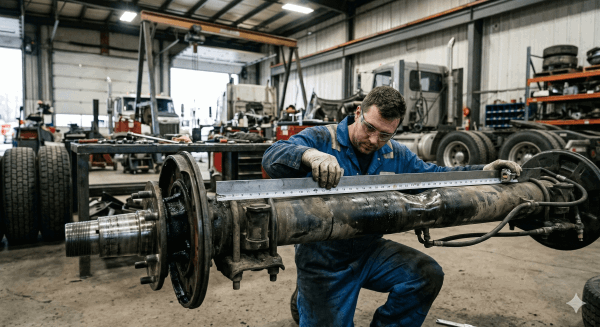
Misalignment shows up in plain ways: the trailer pulls to one side, tires wear unevenly, and fuel use creeps up. A single bad pothole can push an axle out of alignment. Left unchecked, these errors pile up and can result in a catastrophic failure on the highway. Regular tune-ups, at a minimum, go a long way to catching minor problems before they become expensive repairs.
Bent or sprung axles
Worn bushings and shackle bolts
Damaged spindles
Shifted hangers or spring seats
Twisted or cracked frame rails or crossmembers
Misaligned equalizers or torsion arms
In common alignment problems, a trailer that drifts or tugs to one side indicates axle or suspension offset. Uneven tire wear is the tell; if one tire looks bald while the one across from it still has strong tread, alignment is off. Bad alignment can reduce fuel efficiency by as much as 10 percent and increase expenses from premature tire and bearing wear. Drift factors into danger as well. Drifty trailers account for more than one in five towing accidents.
Axles bend from curb strikes, deep potholes, overload or rust-thinned tubes. Even a few millimeters of deflection alters toe and camber at the hubs.
Verify straightness with a taut string or plumb line from the center of the tube or laser-compare hub face planes. Measure on both sides and note results.
Change bent axles immediately. Straightening sometimes covers up micro-cracks. Check spring seats, U-bolts, hangers, and shock mounts for shear marks, elongated holes, or loose hardware and replace any stretched fasteners.
Worn or cracked spindles allow the wheel to wobble, heat the bearings, and force the hub off-angle. That manifests as cupped tread, hot hubs after a short run, or grease seep at the seal.
Inspect spindle splines and threads whenever you service hubs or bearings. Use a dial indicator on the stub to locate runout.
Spindles with sleeve or welded do not fix them, replace them or the entire axle beam. Since a lot of spindle jobs require press work and precise alignment, a professional shop is usually the safer road.
A twisted or cracked frame messes up all the alignment. Rails that aren’t square shift axle centers and no toe or camber tweak can fix that.
Scan frame rails, crossmembers, gussets and weld toes for ripples, flaking rust, torn metal or paint that cracked in a straight line. We measure diagonals between fixed points to confirm that the frame is square.
Frame: Before you do any alignment, straighten or reinforce the frame. Box sections, put fishplates over cracked areas and renew failed welds. Keep dated notes and photos of frame work in your maintenance log for later inspection and resale.
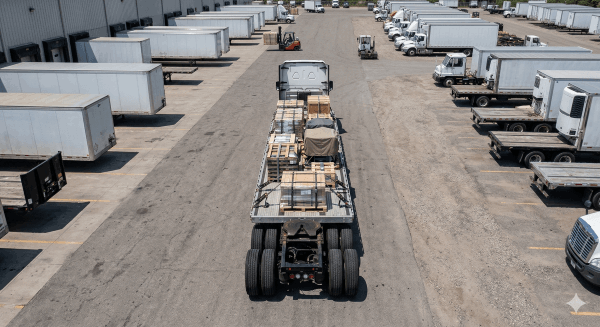
Alignment shifts even when your parts look fine. Unseen forces, such as load balance, road shock, and tire pressure, force axles out of spec, skew tracking, and wear tires quickly. A trailer out by 6 mm (roughly 1/4 in) can crab down the road, making lane hold difficult and increasing fuel burn. Misalignment eats up tread, reduces tire life, and increases blowout danger. Regular inspections, even when there are no obvious issues, detect problems early and maintain costs low.
Uneven cargo applies additional pressure to one side or one axle. That twist alters toe and thrust angle, so the trailer pulls, the tires scrub and heat builds. After a change from palletized goods to bulk or a significant weight increase, reverify alignment. Laser tools can dial axles within 0.8 to 0.4 mm (1/32 to 1/64 in), which aids fuel consumption and reduces tread wear.
|
Cargo Type |
Front–Rear Split |
Left–Right Split |
Notes |
|---|---|---|---|
|
Dense pallets |
60/40 front bias |
±2% side-to-side |
Keep heavy items low and centered |
|
Mixed freight |
55/45 |
±2% |
Balance each bay before closing |
|
Bulk liquids |
50/50 |
±1% |
Baffles reduce surge; recheck after offload |
|
Light volume |
45/55 |
±2% |
Avoid tail-heavy stacks |
Teach drivers and loaders to read axle scales, apply load bars, and stage freight by weight, not dimensions. Fast refreshers minimize realignment drift and in extreme cases decrease the risk of a bent frame.
Potholes, speed humps, curb strikes and washboard roads accelerate alignment drift and can bend hangers or, in extreme cases, an axle or frame. When possible, route around known hazards when a safe alternative exists.
After long runs on cracked pavement or a curb stomp, check. Search out new scuff on tire shoulders, moved spring seats, or uneven ride height. Record all occurrences: date, odometer, and place. Otherwise, a small note connects a pull or vibration to a road shock and directs a 45 to 60 minute alignment check, usually around $50.00 and worth averting bigger repairs.
Low or high pressure alters tire radius and sidewall flex, which skews alignment readings and hides the actual thrust line. Verify and adjust pressures cold to manufacturer specifications for all tires, within plus or minus 5 kPa (plus or minus 0.05 bar), prior to any alignment.
Maintain a pressure record by axle and side. Track daily consumption and mark comments for leaks or valve replacements. Even pressure powers even tracking, extends tread life, ensures safer temperatures, and improves fuel consumption.
Trailer suspension alignment lays the foundation for safe miles and easy hauls. Proper alignment maintains your trailer’s tire wear in check, keeps you tracking straight, and reduces fuel burn. Bad angles show up fast: cupped tires, a tug on the wheel, hot hubs, and odd sway. A fast laser read or string check can catch thrust errors or bent hangers. Little adjustments make a world of difference. For instance, reset axle squareness, replace worn bushings, or shim the spring seats. For air ride, match ride height on each side.
To get out in front, log tire temps, ride height, and verify after curbcids. For a big fleet, establish a 6-month check. Want a bare-bones plan or quick checklist? Contact us and grab a quick reference guide to use on-site.
Trailer suspension alignment calibrates axles and wheels to manufacturer specifications. It provides proper camber, toe, and thrust angle. Correct alignment minimizes tire wear, enhances stability, and guards suspension components.
Technicians measure axle position, toe, camber, and thrust angle with laser or optical tools. They bend hangers, equalizers, shims, or torque rods to bring components into spec. Final checks keep it tracking straight with even tire contact.
Good alignment cuts tire costs, fuel efficiency, and safety. It keeps you from drifting, vibrating, and causing uneven wear. It minimizes wear on bearings, bushings, and springs, prolonging component life.
Be on the lookout for uneven tire wear, feathering, or cupping. Trailer suspension alignment includes noticing pulling, dog-tracking, vibration, or heat in hubs. Excessive fuel consumption and handling issues can be symptoms of misalignment.
Causes are curb strikes, potholes, axle overload, worn bushings, bent hangers, and loose U-bolts. Frame damage, bad fixes, and wrong ride height move alignment out of spec.
Check alignment at a minimum once a year or after every 20,000 to 30,000 kilometers. Check earlier after a jolt, alterations in tire wear, suspension repairs, or any changes in ride height. Fleets with rough routes may require more frequent checks.
Fundamental checks can be done. Accurate alignment requires specialist equipment and knowledge. A good shop has calibrated tools and load-simulated settings to specifications and warranty requirements. This, in turn, saves tires and avoids repeat problems.
Need more information about keeping your truck or trailer road-ready? Discover helpful resources and professional repair services from DMR Diesel.
Off-Road Heavy Equipment Repair
Explore the official resources below to learn more about trailer brake systems, vehicle safety regulations, and maintenance best practices for commercial fleets.
Inspection Requirements for Commercial Trucks and Trailers
Trucking Industry Associations
Commercial Vehicle Safety Standards Including Brake Requirements.