January 09, 2026
Catch frequent trailer brake troubles ahead of time to prevent danger and expenses. Look out for electrical issues, mechanical wear, performance inconsistencies, controller faults, and hydraulic leaks.
Respond to warning signs immediately to preserve a safe stopping distance. Trailer brake problems include motion, check noises, dashboard warnings, fluid leakage, any pull to one side, or extended stopping distance.
Use organized inspections before every trip to keep trailer brakes trustworthy. Inspect pads or shoes, drums or rotors, wiring, fluid levels, and controller settings. Record observations.
Distribute your loads and adhere to your towing capacities to avoid overheating and imbalance wear. It is a trailer brake problem.
Stay ahead of trailer brake problems. Grease moving parts where specified. Clean and coat electrical connections. Adhere to manufacturer recommendations for brake adjustments.
Go professional when problems persist or repairs are specialized-tool deep. Book trailer brake problems diagnostics and controller or component upgrades for reliable, safe braking.
Trailer brake problems are any faults that cut brake power, delay response, or result in uneven wear in either electric or hydraulic systems. Typical symptoms are weak stopping, grabby brakes at low speed, wheel lock on one side, pulsing at the pedal, hot hubs or brake controller warning lights. Common causes range from worn pads or shoes, corroded grounds, broken wires by the axle, bad magnets, out-of-round drums, low hydraulic fluid, stuck calipers, or a mis-set brake controller gain. In wet or dusty use, moisture and grit accelerate rust and abrasion. To catch trouble quickly, check basic stuff first, then parts and wiring. The fixes in the sections below map symptoms to fixes with clear steps and tools.
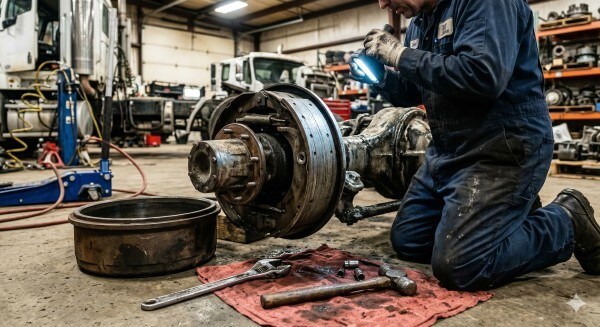
Trailer brake issues manifest themselves as weak or non-existent braking, uneven pull to one side, noise, or heat. Leave them unfixed and they increase stopping distance, strain tow vehicles, and increase crash risk. Routine inspections and timely fixes keep systems secure and compliant.
Worn pads or shoes thinning below spec
Loose, corroded, or damaged wires and bad grounds
Blown fuses or weak controller output
Scored rotors, out‑of‑round drums, sticking parts
Hydraulic leaks, air in lines, low fluid
Faulty or outdated brake controllers
Failing magnets or uneven shoe adjustment
Weak or no braking is frequently electrical. Check for frayed conductors along the frame, chafed insulation near spring hangers, and corroded 7‑pin plugs. A bad ground can masquerade as many faults, so verify a clean, tight ground to bare metal.
Inspect fuses and breakers in the tow vehicle. Next, measure controller output at the plug. Underpowered signals cut brake force. Test each mag circuit for resistance within spec and stable voltage under load. Replace cracked magnets and heat-stiffened leads. A lot of “no brake” incidents boil down to a controller that’s not receiving battery power.
Pads, shoes, and rotors or drums wear with load and heat. Thin friction and scored surfaces reduce grip and increase fade, particularly on extended descents. Below minimum thickness, turn or replace damaged rotors or drums.
Check return springs, calipers and adjusters for sticking. A seized caliper or frozen adjuster results in uneven braking that pulls the trailer. Record mileage and duty. Order parts before they fail, not after a roadside stop.
Inconsistent braking or a soft feel indicates weak magnets, misadjusted shoes, or air in hydraulic systems. When you’re testing, compare wheel temperatures after stops. A cold hub usually indicates no brake on that side.
Uneven braking that yanks the trailer can be caused by either one disconnected brake or shoes worn unevenly. Noise, shudder or lockup means warped rotors, oval drums, or contaminated linings. Test side to side on a safe, straight road for bias.
Check controller self-test, display codes and output rise with pedal and manual slide. No action or sporadic force indicates a defective unit or bad feed from the truck battery. They are calibrated to the trailer mass, with set gain and number of axles. Gains that are too low feel weak, while those that are too high can lock wheels. Swap out old models that don’t pass diagnostics for peace of mind and steady control.
Inspect lines, flex hoses, and fittings for wet spots that leak pressure and extend stops. Top off with the specified fluid, then bleed air if the pedal sinks. Check surge actuators and calipers for seal deterioration. Fix leaks and replace failed components before it loses all braking.
Root causes include environment, load configuration, aging components, and skipped maintenance. Weak or uneven braking often traces to simple faults first. These faults include a disconnected brake on one side, worn shoes, or a faulty controller or feed power.
Table: Root Causes vs. Issues
Rust or corrosion or water ingress leads to failing or non-existent brake power and seizing brakes.
Uneven load or overloading leads to the trailer pulling to one side, overheating, and rapid wear.
Aging pads, magnets, and wiring lead to fading force, noise, and response delay.
Neglected service -> Uneven braking, seized adjusters, contaminated linings
Broken controller or power leads to no output, crazy gain, and lockups.
Damaged/loose wiring -> One side dead, flicker under bumps
Numbered list of core causes
Environmental exposure: Salt, water, and grit corrode drums, connectors, and grounds.
Load errors: Misbalanced cargo and axle overload raise heat and strain.
Component aging: Pads, magnets, bearings, and harnesses lose performance with cycles.
Skipped maintenance: missed lubrication, adjustment, and cleanings hide small faults.
Control system faults: weak power or a failed controller stops proper actuation.
Mismatched brake assemblies: using 3.5K on 5.2K to 6K duty, or 7K on 8K to 12K, caps stopping power.
Inspection checklist highlights
Measure brake shoe wear on both sides or even contact patterns.
Verify controller output with a meter; test manual override.
Inspect grounds, splices, and connectors for looseness and rust.
Spin wheels, hear scrape, and check magnet drag with a feeler or pull test.
Road salt and moisture surge into drums and connectors, creating rust, weak grounds, and shorted wires. Debris can wedge in assemblies and score drums, which decreases friction and can cause one side to bite harder.
Utilize protective coatings on drums and backing plates, sealed heat-shrink crimps, and dielectric grease on plugs. Clean rinses after wet or salty rides are important.
Look out for brown scale on drums, green patina on copper, and white crust on aluminum terminals. Keep covered or inside to delay spoilage.
Stable weight over axles maintains consistent braking power. Uneven loads cause one side to run hotter and grab, so the trailer drags.
Match trailer setup to tow vehicle rated mass and brake controller limits. Don’t overload; heat build can glaze linings and fade power. Use load distribution hitches to shift tongue weight and stabilize braking.
Trace pad and magnet life, in kilometers and stops, not just years. Swap worn-out assemblies and aging harnesses before they fail. Schedule upgrades to new-age controllers and matched 5.2K to 6K, 7K, 8K, 10K or 12K to 16K kits to handle the task. Record install dates, torque specs and service intervals for each axle.
Skipping checks allows checkable faults to turn into checkbook-sized bills and risks. Keep a maintenance log for inspections, repairs, and parts. Schedule routine utility trailer service, adjust brakes, repack bearings, and test output. Train drivers to do daily checks, including controller tests, plug and wire look-overs, and brake responses.
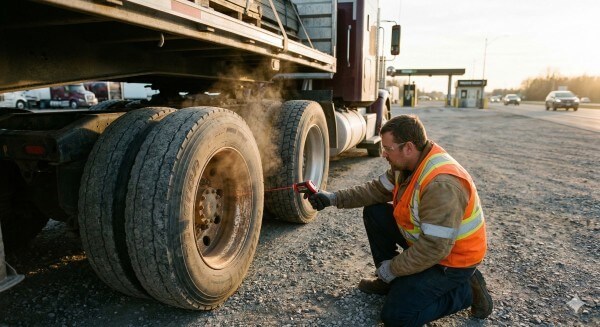
Minor changes in brake feel, sound or response frequently appear well in advance of a failure. Drivers tend to be among the first to identify changes in air brake performance, so prompt reporting assists in preventing hazards at an earlier stage.
Brakes feel spongy, are delayed in response, or require extra pedal travel.
Trailer pulls to one side when slowing or stopping
Grinding, squeal, or clicking from drums, rotors, or hubs
Brake warning light or controller fault message appears
Longer stopping distance, especially with heavy loads
Hot wheel end, burning smell or smoke by a drum
Visible leaks, damaged lines, or frayed/corroded wiring
Uneven pad or shoe wear or loose hardware on one wheel end
Air pressure drops, slow build, or frequent compressor cycling
Any change in normal performance since the last trip
Report any change immediately to maintenance. Use a quick checklist: listen, look, press-test, and log. If a warning sign appears, react quickly to prevent heat fade, tire damage, or loss of control.
Grind or sharp squeal under light brake use indicates the pads or shoes are worn and contacting the metal. Clicking can indicate loose springs, weak return hardware, or a cracked drum.
Noise from a single wheel end typically stands for uneven wear or a stuck adjuster. Insistent noise when at constant stops typically demands an urgent review and fix.
Have your train drivers and yard staff record when the noise begins, which side it emanates from and if load or speed affects it. That detail accelerates diagnosis and minimizes speculation.
Identify wet streaks on lines, chambers or couplers indicating fluid or air system leaks. Corroded connectors or green or white build-up on terminals can interrupt power to electric brakes, so clean them up with a wire brush and seal them.
Staggered shoe wear, cracked rotors, heat spots or loose bolts indicate imbalance or misadjustment. Dashboard lights or brake controller alerts indicate sensor or circuit faults that require immediate testing.
Daily air pressure checks and a walk-around to air brake chambers help identify low pressure, damaged diaphragms or parts mismatched before a trip.
Slow, soft or weak brake response usually boils down to worn components or improper adjustment. Longer stops while under heavy loads indicate fade or imbalance.
Pulling to one side can indicate a disconnected brake or uneven shoe wear. If one side bites deeper, the trailer can pull that way. Gauge brake balance by application pressures across axles. Unequal air pressure or mechanical issues on a semi-truck can create the same tug.
Wild, bad, or scary—record each event, note speed, load, road, and which axle misbehaved. After every ride, score overall brake feel and mark any recurring problems for maintenance.
Proactive maintenance minimizes brake failures and reduces downtime by detecting wear early and repairing minor defects quickly. Implement with a transparent checklist, divide responsibilities by cadence, keep critical components in-house, and educate teams on electric and hydraulic systems. Add in ancillary jobs that safeguard braking, like wheel bearing maintenance, suspension clean and lube, tire work, and seasonal measures such as winterizing water systems where equipped.
Be proactive with your maintenance. Do a full inspection before every trip. Inspect pads and shoes for thickness and glazing. Inspect drums for heat spots and inspect wiring for chafe or pinch points. Test brake lights, turn signals, and taillights, as dependable signals facilitate safe braking in traffic.
Use a checklist so nothing gets missed: pads or shoes, drums or rotors, magnets or calipers, lines and hoses, wheel bearings, suspension bushings, breakaway switch and battery, and controller gain. Pay attention to leaks on hydraulic lines and any scorched odor by hubs.
Adjust and ready check. Spin each wheel off the ground, brake, and sense for even bite. After a brief test pull, check for hot hubs or dragging.
Capture outcomes, schedule fixes, and designate owners. Daily checks go to drivers, weekly to shop techs, and monthly to a lead tech for teardown items.
Put the proper grease on pivots, shoe contact points, return springs and star–wheel adjusters. A clean first keeps the grit out.
Keep intervals tight: light-duty every 5,000 to 8,000 km; severe duty sooner. Over-grease causes dirt build-up and sticking, so use small amounts. Add suspension bushings and equalizers to the lube plan to slow corrosion and keep travel smooth. Bake these steps into standard work for all trailers.
Tighten loose connectors, swap cracked wires or harnesses, and secure all grounds to bare metal. Test brake controllers, breakaway circuits, and all lamps. Brush green or white crust from terminals and coat with dielectric grease. Replace burnt fuses, weak relays, or resistors to maintain solid brake lights.
Establish shoe-to-drum clearance according to manufacturer’s spec. Even auto-adjusters require monitoring. After making adjustments, go road test and sense for any pull, drag, or lag. Re-check hot spots with an infrared scan. Hot spots point to misadjustment or failing bearings. Add tune-ups to the service schedule including wheel bearing inspection and repack, tire rotation and balancing, and controller gain checks. Correct gain stops lockup when unloaded and fade when loaded.
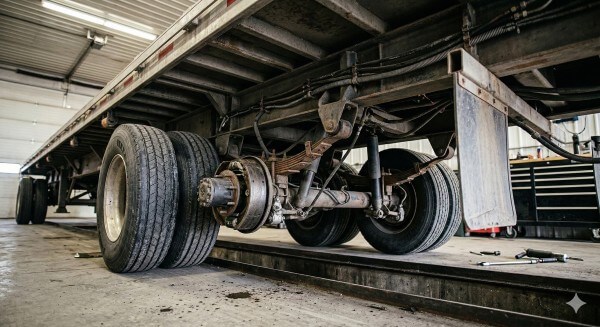
Trailer design establishes the maximum threshold for brake power, heat management, and maintenance. Brake assembly type, trailer mass and balance, axle count, and towing speed all influence the rate at which a trailer decelerates and the frequency with which components fail. Load spread and center of gravity matter; uneven weight raises the risk of pull, sway, and hot spots in one brake. Heat, moisture, and corrosion decrease life, so material type, seals, and venting are important.
Brake capacity should correspond to axle count and rating. A single axle is typically equipped with smaller drums or single rotor discs, whereas tandem or triple axles demand a higher degree of combined brake torque and a greater capacity to combat heat.
Even out the pressure on single axles. Adjust gain to prevent lockup on light loads. Particularly on tandems, bias the front axle slightly higher to minimize push during decel. On triples, maintain close to equal bias and check proportioning so that one axle doesn’t drag.
Examine each axle’s assembly for uniform wear, matching shoe/pad specifications, equal magnet current (electric), and equal line pressure (hydraulic). Uneven braking points indicate bent backing plates, sticky slides, bad grounds, or weak return springs.
Upgrade when adding weight or buying used units. Consider larger diameter drums or vented discs, higher-temperature pads or shoes, self-adjusters, and heavier-gauge wiring with dedicated grounds.
Leaf springs generate friction and can transmit shock into the brakes, which accelerate wear on shoes, pins, and magnets. Torsion axles isolate road buzz, but heat can build near hubs on long grades. Air suspension maintains ride height and load distribution, reducing spike loads on brakes and tires.
Check hangers, bushings, equalizers and torsion arms for play. Cracked leaves, worn bushings or low air pressure alter axle loading and can induce uneven braking and yaw.
Plan service by duty: dusty sites need more frequent drum cleanouts. Wet climates must have anti-corrosion grease and sealed connectors. Swap worn components pronto to avoid wobbliness during hard stops.
Know the system to set gain and plan spares.
Electric: adjustable and versatile, needs clean grounds, correct voltage, and sealed plugs. Troubleshoot with a multimeter: check controller output, magnet ohms, and voltage drop at each wheel. Stock magnets, breakaway switches, and 7 pin connectors. Educate employees on controller configuration and load-dependent gain.
Hydraulic (electric-over-hydraulic or full hydraulic) is strong and precise and suits heavy loads. Bleed lines, check psi at calipers and watch for leaks. Seal and actuators for fluid and an extra educate on tire pressure checks and appropriate fluid selection.
Surge is simple and self-contained with limited fine control on long grades. The service coupler slides and master cylinder load coupler kits and pins are important. Practice backing-lockout utilization.
Your system selection influences wiring complexity, power requirements, adjustability and response.
Braking Systems Overview
|
System |
Control |
Strengths |
Limits |
Best use |
|---|---|---|---|---|
|
Electric |
Cab controller |
Adjustable, simple parts |
Needs solid wiring, heat fade risk |
Light–medium loads |
|
Hydraulic EOH |
Pump/ECU |
Precise, strong, fast |
Cost, power draw |
Medium–heavy loads |
|
Surge |
Coupler load |
Simple, no wiring |
Less control, fade on grades |
Boats, rentals |
Brake problems endanger extended stops and control loss. Getting help early keeps you safe and saves you more expensive parts from being repaired down the road.
Book service when you hear grinding, experience the trailer pulling to one side, or detect a spongy pedal and longer stopping distance. These indicate worn shoes, frozen adjusters, failed magnets or hydraulics. Check brakes annually or every 19,000 kilometers and more frequently with heavy loads, steep grades or rough roads. Include interim inspections at 4,800 kilometers for pads, drums and wiring. Replace brake shoes when friction material is under 3 millimeters. Clean magnets and drums every 6 months and perform a full adjustment every 19,000 kilometers. If issues recur after a DIY patch, pause and book diagnostics.
Request a comprehensive system check including wiring continuity, breakaway switch operation, wheel bearing endplay, drum runout, shoe arc match, and controller output under load. A pro will road test at controlled speeds and loads to gauge stopping distance and heat across rims. This detects sneaky issues such as a weak ground, a sticking backing plate, or a warped drum. If you tow every day or make long trips, schedule shorter service. When in doubt, book service.
Certain jobs require tools and information that most owners don’t have. Think oscilloscope checks of magnet waveforms, hydraulic pressure tests, re-arc of shoes to drums, ABS module scans, and proportional controller calibration. Upgrades such as larger drums, vented rotors, higher-temp linings, stainless hardware, or sealed connectors ought to be sized to axle rating and gross trailer mass. A pro tech will match parts, set torque, bleed lines, and check balance on all wheels.
DMR Diesel can do diagnostics, annual services and emergency repair. They stock wear items, ship parts fast, and support heavy duty fleets. Request magnet replacement every 3 to 4 years and controller refresh at 5 to 7 years, and cleaning of all connections biannually for stable output.
To tie it back, trailer brake problems seldom originate from a single source. Minor issues accumulate. Loose grounds, worn pads, weak magnets, leaky seals, and heat fade on long grades each contribute risk.
To be in front, make a simple check plan. Test brake gain with a light load trailer. Pull a drum and inspect shoe wear. Clean grounds to bare metal. Check wire drop with a multimeter. Record stopping distances at 40 kph on a flat lot. Note modifications.
Nothing like real work to provide clear evidence. A 2 mm pad gap means you should swap soon. A 0.5 V drop at the hub indicates a wiring repair. A hot drum signifies a drag shoe.
Trailer brake issues assistance? Schedule a brake check with a shop or post your notes and request a quick read-over.
Worn pads or shoes, calipers that are seized, corroded wiring, weak magnets (electric), air leaks (air brakes), fluid leaks, and misadjusted drum brakes. Heat fade on long descents is typical. Regular inspections catch these early and prevent expensive repairs.
Be on the lookout for extended stopping distances, pulling to one side, vibration, grinding noises, hot hubs, brake lights, or uneven tire wear. For electric brakes, check with a brake controller manual override. Any change in feel or sound requires servicing.
Overload, dragging brakes, misadjusted drums, sticking calipers, neglected wheel bearing lubrication, or riding the brake on descents. Wrong brake controller gain overheats electric brakes. When going downhill, use proper gearing and stop to cool if you smell burning.
Check each 10,000 kilometers or 6 months, whichever comes first. For heavy use or mountain routes, check more frequently. Change pads or shoes at wear limits, flush brake fluid every 2 years, and repack wheel bearings annually or per manufacturer recommendations.
Yes. Axle placement, brake size, and suspension all affect stability and stopping power. Bad weight distribution amplifies sway and stopping distance. Maintain 10 to 15 percent of total trailer weight on the hitch and secure cargo evenly over axles.
Probably low controller gain or poor ground or corroded connectors or worn magnets or glazed drums or undersized wiring. Check voltages at the magnets, clean connections, adjust drums, and adjust gain with a loaded trailer until you achieve firm, smooth braking.
Get assistance if brakes pull hard or overheat repeatedly, fluid leaks, the controller throws faults, or you cannot set gain without lockup. Service before a long trip, after a wheel bearing issue, or if you’re uncertain about any diagnosis.
Looking for more heavy-duty maintenance insights? Browse additional guides from DMR Diesel covering trailer repair, diesel engine diagnostics, and fleet maintenance solutions.
You may also explore the official resources below to learn more about trailer brake systems, maintenance and best practices for commercial fleets.
Commercial Vehicle Safety Standards and Brake Regulations