March 28, 2026
Downtime leads to tangible losses in productivity and revenue, particularly when equipment exits the site for welding. Mobile Welding Fabrication Cut down on delays, labor overruns, and contract penalties by taking your services to the site!
Mobile welding fabrication takes the shop to the field, allowing for quick repairs, custom fabrication, and modifications on steel, stainless, aluminum, and specialty alloys. Use flexible scheduling to maintain momentum and minimize disruptions.
Immediate service minimizes downtime and gets your operation back up and running sooner by diagnosing and fixing problems on site. It is designed for rapid response coverage to 24/7 emergency situations.
By cutting out transport, we save wear and tear, reduce logistics expenses, and avoid damage in transit. Keep heavy equipment stationary and schedule work so other site activity proceeds.
Mobile welding fabrication solutions maximize efficiency by bringing welding to the operation and enabling simultaneous operations. Outfit mobile teams with sophisticated machinery, power sources, and cutting tools for a range of methods.
Select the appropriate mobile partner by checking certifications, experience in the field, safety standards, and equipment preparedness. Ask for evidence of comparable projects and verify that they can ship quickly if necessary.
Mobile welding fabrication is metalwork done on-site that takes welding, cutting, and fitting services to a job location, including field repairs, custom builds, and modifications for steel, stainless, and aluminum on construction sites, farms, and facilities. Crews employ portable MIG, TIG, and stick equipment along with generators, torches, and safety rigs to operate in confined locations or out in the wild. Turnaround frequently shrinks as well because transport, staging, and wait times fall. Common jobs are gate frames, handrails, brackets, machine guards, and equipment repair. Quality depends on good material preparation, correct joint design, correct heat input, and post-weld checks like visual tests and dye penetrant. After that, the tutorial outlines essential steps, equipment lists, safety tips, cost considerations, and supplier screening advice.
Mobile welding fabrication downtime impacts output, cash flow, and timelines. It manifests itself in idle crews, stalled projects, missed delivery dates, and increased risk throughout the supply chain.
When a haul truck, crusher, or crane is idle, it halts value at its origin. A plant that ships €50,000 a day can lose that entire amount if a critical weld busts and everything stops. Others estimate average plant downtime at $8,000 an hour, which adds up a lot over a full shift. Across the industry, downtime costs 5 to 10 percent of production costs when you factor in labor, energy, and lost throughput. OEE drops, and the hit compounds: planned work piles up, buffers shrink, and downstream teams wait. In logistics, a broken trailer gate can stop a dock lane and reduce daily turns, which reduces on-time rates and, eventually, customer trust. The hard part is the hidden loss: canceled orders, price concessions, or a buyer who switches vendors after one bad week.
It’s expensive and slow to move a 20-ton excavator off site. You pay a low loader, permits, and a standby crew at both ends. It’s easy to waste 6 to 10 hours of billable time with nothing to show for it. If the shop queues your job, that’s another day. Mobile welding slashes this waste by delivering certified welders, power, and consumables to the site, so riggers, operators, and QA personnel remain busy. In pen sites—ports, plants, tunnels—on-site work sidesteps spillover slowdowns such as traffic holdups or crane rescheduling. In a month, skipping two shipping cycles saves you dozens of man hours and thousands in rental fees.
Contracts frequently enumerate daily liquidated damages. Miss a deadline because of a cracked boom or a failed pipe weld and penalties begin. Mining, an hour lost during peak shift reduces ore moved, pushing stockpiles and mill feed off schedule. In construction, a single welded connection on a steel frame can delay lifts, trades, and inspections, causing indirect costs to skyrocket. Extended downtime takes its toll on teams — morale drops, rework increases, and safety may deteriorate. Rigorous maintenance regimes, rapid triage, and mobile repair capability mitigate these hazards.
|
Affected domain |
What shifts |
Cost instance |
|---|---|---|
|
Productivity |
Lower OEE, stalled lines |
$8,000/hour average plant loss |
|
Revenue |
Missed output, canceled orders |
5–10% of production costs |
|
Costs |
Additional labor, shipping, fines |
Multi-day delays, LDs per day |
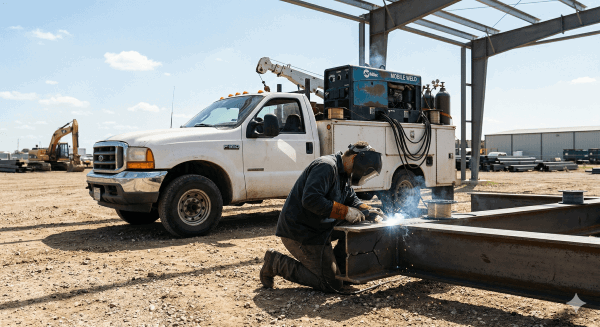
Mobile welding takes the shop to the site. It shortens delays, reduces costs and maintains momentum. Crews receive custom fabrication, emergency repairs and expert welders working in tight or rugged locations, all without transporting cumbersome equipment off-site.
Mobile teams get to the site quickly to respond to emergency cracks, blown joints, or worn brackets. That reduces the lag between breakdown and repair, which counts when every hour of stalled equipment is money down the drain.
By bringing the welder out to the field, it eliminates waiting in line at a remote shop. A loader bucket, guard rail or pump base can be evaluated and fixed then and there, so other crews can continue. We’ve found that this helps auto body shops, trucking fleets and construction sites that require quick turnarounds to meet deadlines. The outcome is consistent traction, less milestone overlook, and equipment that is safe and operational.
It’s slow, risky, and expensive to move a 12-ton press frame or a long steel beam to a static shop. On-site work means no cranes, no permits, and no long hauls, and it saves additional wear from lifting and transit. It reduces the risk of new damage in transit. By keeping fabrication on-site, decisions are faster, scope control is tighter, and transportation charges are reduced.
On-site welding folds into daily site work, so crews frame, pour, or wire while welders fix a cracked bracket or install handrails. Less shuffle leads to tighter schedules and easier resource planning.
Mobile teams can run parallel jobs, like MIG on guard posts and TIG on thin stainless ducts. That shrinks the critical path, keeps them occupied, and helps you make dates without overtime bloat.
Fast dispatch is what counts when a broken hinge stalls a gate or a fractured mount stops a conveyor. Most mobile welders provide 24/7 callouts, so it minimizes downtime and supports safety. They bring power, generators, PPE, and fumes control to provide a clean, controlled repair in situ. Customers typically pay for real hours on the job, assisting with cost control.
Mobile welders do stick, MIG, TIG and arc-air gouging on steel, stainless, aluminum and niche alloys. They do minor repairs, such as a cracked step, as well as major projects, such as bracing a column or fabricating custom brackets to accommodate unusual onsite requirements. In rain, heat or cramped pits, they customize tools and methods to complete the work securely and with quality.
Mobile welding fabrication is about quick, secure repairs at the moment of requirement. It keeps equipment, trailers, and buildings in operation by addressing cracks, wear, and custom modifications without shop downtime. Work frequently involves cracked frames, worn buckets, bent arms, and damaged blades, as well as deck, landing gear, and guard repairs. Typical scenarios where on-site welding is beneficial include:
emergency downtime fixes;
field retrofits for unique jobs;
safety-critical code repairs;
access-limited sites;
mixed-metal repairs requiring method changes;
weather-tolerant stick welding when shielding gas is impractical.
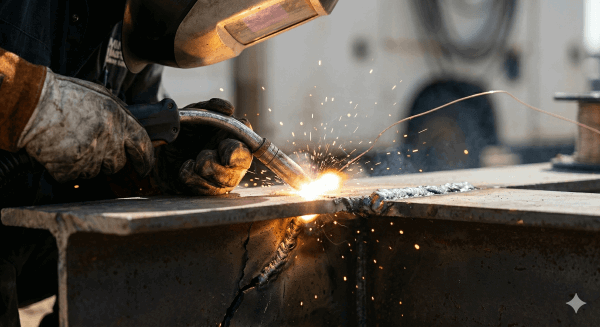
Field crews find cracks in frames, booms, brackets, and mount points with visual, dye penetrant, and straight-edge tests. Typical locations include hinge bosses, weld toes on stiffeners, and heat-affected zones adjacent to previous repairs on excavators, dozers, and trailers.
Begin by halting crack growth with drilled ends, then gouging or grinding a clean groove. SMAW/stick is suitable for on-site due to its easy rig and tolerance to wind, rain, and dust. GMAW/MIG works beautifully under tarps or tents where shielding is constant. Preheat, low-hydrogen electrodes, and controlled passes prevent new defects and regain strength.
Early repair prevents crack migration into critical members, which saves the frame or deck from full replacement. Work according to code and site specific rules. Procedural control, appropriate filler for carbon steel or alloy, and inspection records fulfill safety and regulatory requirements.
Buckets, blades and cutting edges on excavators, loaders and graders wear fast at lips, corners and side cutters. Worn cutting edges, cracked buckets and bent arms crop up frequently in earthworks and mining.
On-site hardfacing constructs wear surfaces with abrasion-resistant overlays, whereas plug welds and doubler plates fortify high-stress locations. For carbon steel, low-hydrogen stick rods are common. For specialty alloys, matched fillers and controlled heat input minimize brittleness. Rapid field service maintains productivity and minimizes haul-out time.
We have teams that attach tie‑downs, steps, guards, mounts and tool racks right on site. They install quick‑attach plates, custom brackets and rear impact guard upgrades to comply with DOT regulations, or modify equipment for confined access, hoisting points or sensor mounts.
They handle trailers with busted landing gear, cracked steel or aluminum floors and loose decks, in addition to farm equipment and home metal work such as railings, fencing or patio frames. Weather screens assist in keeping arcs steady when wind or rain strikes, so repairs stay on schedule with quick remedies, more powerful reinforcements and tidy retrofits.
On-site mobile welding delivers the equipment, expertise, and quality control to where you work. It eliminates unnecessary phases, reduces lead times, and maintains work in sync with actual site conditions.
Too many assets are too heavy, too fixed or too sensitive to relocate. Imagine, for example, excavators in a quarry, a heat exchanger in a plant or a crane boom at a port. On-site fabrication allows companies to weld frames, brackets, rails, and pressure parts in place, with no tear down. It reduces the risk of rigging damage, prevents site shutdowns, and saves the days that shipping and reassembly would add. It enables challenging work—thin skins on hoppers, massive jaw gaps, crown-out welds on towers at elevation—with portable rigs, positioners and lift-safe setups. Fabrication occurs with actual loads and adjacent fits; therefore, the alignment is correct initially.
With the crew on-site, operators demonstrate specific failure points, engineers verify weld sizes and joint design, and welders fine-tune heat, filler selection, and sequence with immediate feedback. This tight loop makes tolerances clear, minimizes rework, and enables code checks right on the spot. It further streamlines project management by consolidating cutting, fit-up, welding, and inspection in a single location, resulting in reliable quality throughout a high volume of work.
Transporting steel to a shop and back again can consume days. On-site teams eliminate that delay and frequently provide same day or next day service for emergencies. This is critical for lines that need to stay up. Rapid, accurate repairs preserve efficiency and mitigate the safety hazards associated with hurried labor. Technicians can test fits against the actual assembly and then verify with visual, gauge or non-destructive tests before handoff. The flexibility to work on urban sites with limited access or remote sites with limited power translates into consistent performance in all scenarios. Emergency calls are included as well so teams can contain cracks, reset guards or reconstruct mounts before issues propagate. If you do it right the first time, it decreases the likelihood of doing it wrong a second time.
No transport or disassembly
Same-day or next-day response
Real-time team alignment
Fewer delays and handoffs
Consistent, site-matched quality
Works in urban or remote areas
Handles thin, gapped, or high-elevation welds
Strong first-time fix rate
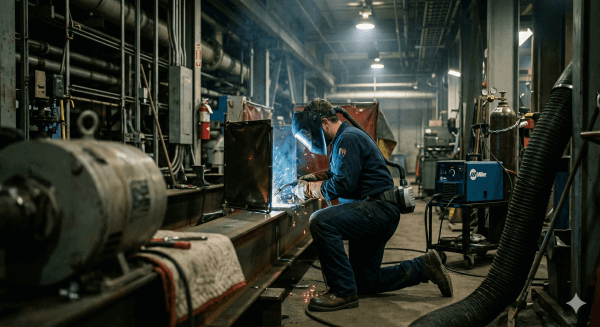
Mobile welding is taking the shop to the job. Crews work with remote builds, busy plants and tight urban spots, utilizing truck-mounted equipment to weld, cut and fit on site. This reduces downtime, enables field repairs and keeps projects going without having to ship components off site.
Work changes by dirt, breeze and room. Welders evaluate access roads, lift points, and where to position tools. When welding from one side, intricate joints require at least 300 millimeters clearance. If only one angle is accessible, 1 foot is a reasonable minimum. Restricted locations require tinier torches, abbreviated leads, and staged fire watches.
They establish safe work areas with folding tables, slip mats, and fume extraction when feasible. Screens or tarps protect the public and help contain sparks and flashing while shielding crews and adjacent workers.
Every site has its safety and operations rules. Teams coordinate techniques such as GMAW, FCAW, and GTAW with site power, ventilation, and lift constraints, and schedule preheat or interpass measurements when welding thick plate or HS steel.
Remote access, scaffold decks or tight pits require adaptable rigs. Modular clamps, magnetic grounds, and low-profile guns help reach awkward joints. Battery lights and portable fans keep work visible and clear.
Mobile welding adheres to rigorous health and safety standards. Crews wear proper PPE: helmets with the right shade, fire-resistant clothes, gloves, and hearing and eye protection. Fire blankets, extinguishers, and hot-work permits are kept nearby.
Risk assessments are job-specific. They map fume paths, spark travel, and heat in nearby materials. Controls include local exhaust, fire watches, and clean zones for gas cylinders.
Compliance spans local codes, safety acts, and standards like ISO and AWS. They keep records, including permits, WPS/PQR references, and a short project journal to note progress and any nonconformities.
Trucks lug generators, inverters, and air compressors for welding, cutting, and prep. Machines span MIG/MAG, flux-cored, Stick, and TIG for stainless and aluminum, where exact heat input, clean gas lines, and tight torch control are important.
Teams carry different guns, TIG torches, cups and types of wire for carbon steel, stainless and aluminum. They come equipped with grinders, bevelers, plasma cutters, magnetic drills and purge kits.
Field work requires more workspace than simple Stick welding, particularly for complicated TIG rigs. Smart preparation minimizes noxious fumes, flashing, and fire hazards and maintains productivity. What makes Mobile Welding different? Mobile welders weave fit-up, weld, and repair into site flow, saving clients time.
Mobile covers a lot of tasks, from field fixes to full builds, so the right partner needs range, proof of skill, and the gear to work on site. Costs are important too. A lot of crews charge by the hour, and work can last anywhere from a few hours to a week or more. Scope and rate transparency go a long way in managing expenses.
Find the right mobile partner. Demand years in the field, not just the shop, and ask for project lists relevant to your use case — structural steel, food-grade stainless, aluminum gates, etc. Ensure they are certified — ISO 9606 or AWS D1.1/D1.2 for structural and aluminum work, and pressure vessel or pipeline tickets if you run pressurized systems. Check if they can cut, fit, and finish on site: MIG, TIG, stick, flux-cored, oxy-fuel, and plasma cutting. Look for examples: a stainless tank patch with TIG and purge, a carbon steel beam splice with stick and proper preheat, or an aluminum ramp with MIG pulse.
Pick the partner that has been in the trenches with heavy machinery, industrial welding and field repairs. Request case notes with dates, materials, weld process and results. For example, a 12 mm excavator boom crack stop-drilled and gouged then multi-pass welded and stress-relieved, or a plant shutdown with a 20 m conveyor stringer cut-out, squared and reinstalled, all within 24 hours. Make sure they can accommodate on-call and night or weekend work. Repeat shippers abound in this arena, and loyal customers like to exhibit confidence and dependability.
About: Identifying the ideal mobile partner. Ensure there’s an experienced mobile team, fully equipped trucks, and wide-ranging welding options. A robust truck smartly crammed with generators, leads, torches, clamps, PPE, fall gear, fire watch tools, along with spare rods and wires. Crews would consist of a minimum of one lead welder and fitter. Some welders have side gigs and run flexible slots, which can be a boon when you need fast field fabrication. Look over their public service menu and pricing, then receive offers and quotes to compare scope, hourly rates, travel charges, and consumables. Mobile services deliver convenience, just-in-time timing, pricing control, expert expertise, and safer in-home work.
Checklist: Verify certifications. Match process to material. Inspect gear. Confirm crew size. Review past jobs. Check insurance. Compare quotes. Set time window and rate.
Mobile welding cuts wait time and lost work. Crews arrive quickly, repair fractures, replace components and keep equipment operational. Trucks roll with tools, steel, gas and test gear. Jobs wrap in hours, not days. Think of a bent gate hinge on a warehouse dock. A split handrail on a hotel stair. A worn loader bucket lip at a quarry. Nice clean welds. Safe components. Less drag on your operations.
In choosing a partner, look at weld certs, past work and method proof, safety record, and fit-up skills. Inquire about rates, travel fees, and lead time. Get a clear scope and a neat close out note.
Prepared to slice through delays and keep work flowing? Contact for a quote and next steps.
We take mobile welding fabrication to new heights by bringing certified welders and equipment to your site. They fix or construct metal items on-site. It cuts transport delays, minimizes downtime, and keeps things humming in a safe manner.
Our techs show up quick. They diagnose, cut, weld, and finish on one visit. No hauling, no workshop waits. That means you receive faster repairs, fewer manhours, and less downtime.
Common projects are cracked frames, broken brackets, worn hinges, pipe leaks, guardrails, and machinery mounts. Teams cover structural reinforcements and emergency breakdowns across construction, manufacturing, and logistics.
Most crews work with steel, stainless steel, and aluminum. A number work with cast iron and exotic alloys. They choose the appropriate procedure, which can be MIG, TIG, or stick, depending on the material and surroundings.
On-site fabrication is for speed and fit. Measurements, cutting, and welding occur where the part resides. This guarantees exact fit-up, reduces rework, and speeds up the return to service.
Yes, when done by certified professionals. They use site-specific risk assessments, fire watches, ventilation, PPE, and hot work permits. They secure work zones to protect people and equipment.
Verify certifications, insurance, and safety record. Check comparable project experience and turnaround times. Inquire about material capabilities, equipment, and techniques inspection. Ask for references and transparent pricing before work begins.
Not what you were looking for? Explore DMR Diesel’s expert resources on diesel engine repair, trailer repair, and preventative maintenance to keep your equipment running reliably.
Commercial Vehicle Inspection (CVIP)
Looking to learn more about trailer safety and electrical systems? Explore trusted resources from transportation authorities and industry references that explain trailer lighting requirements, vehicle electrical systems, and commercial road safety standards.